

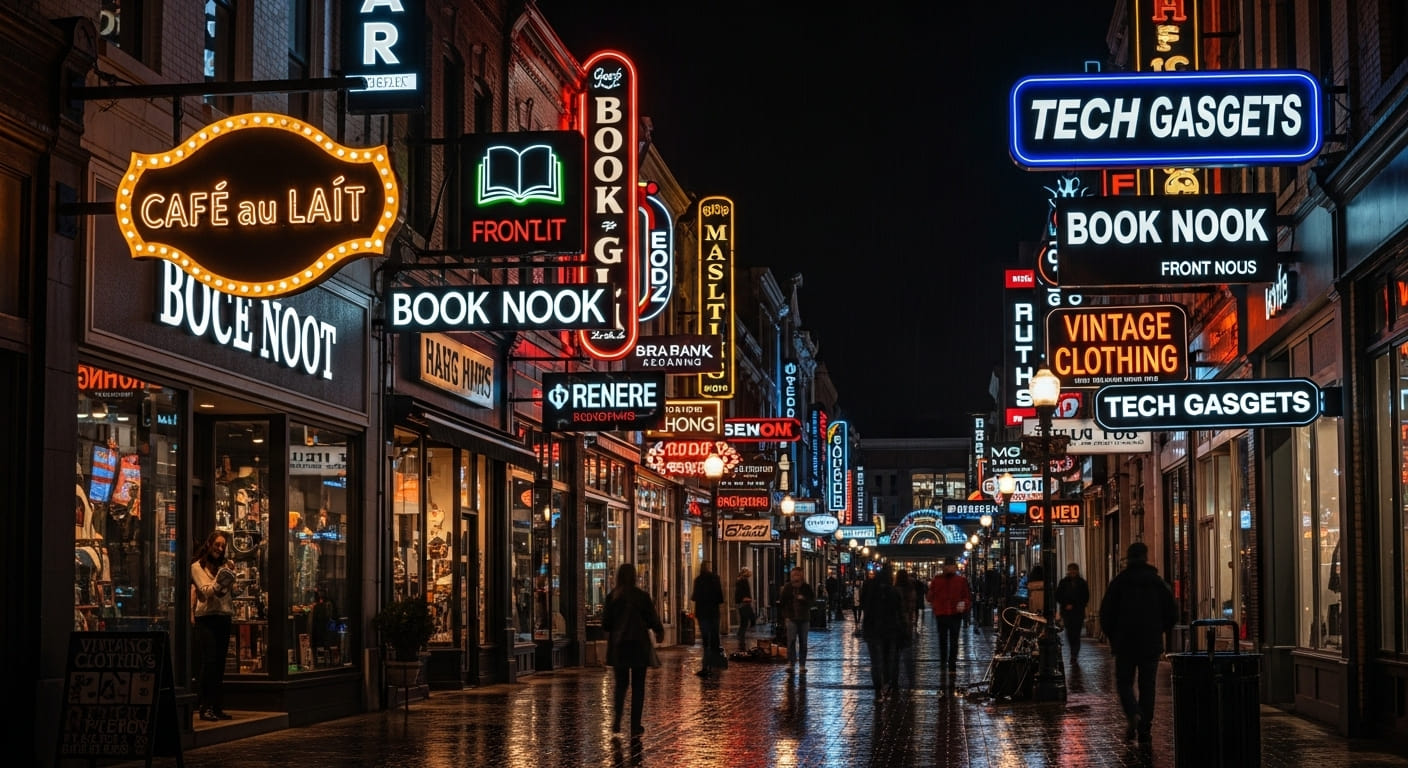
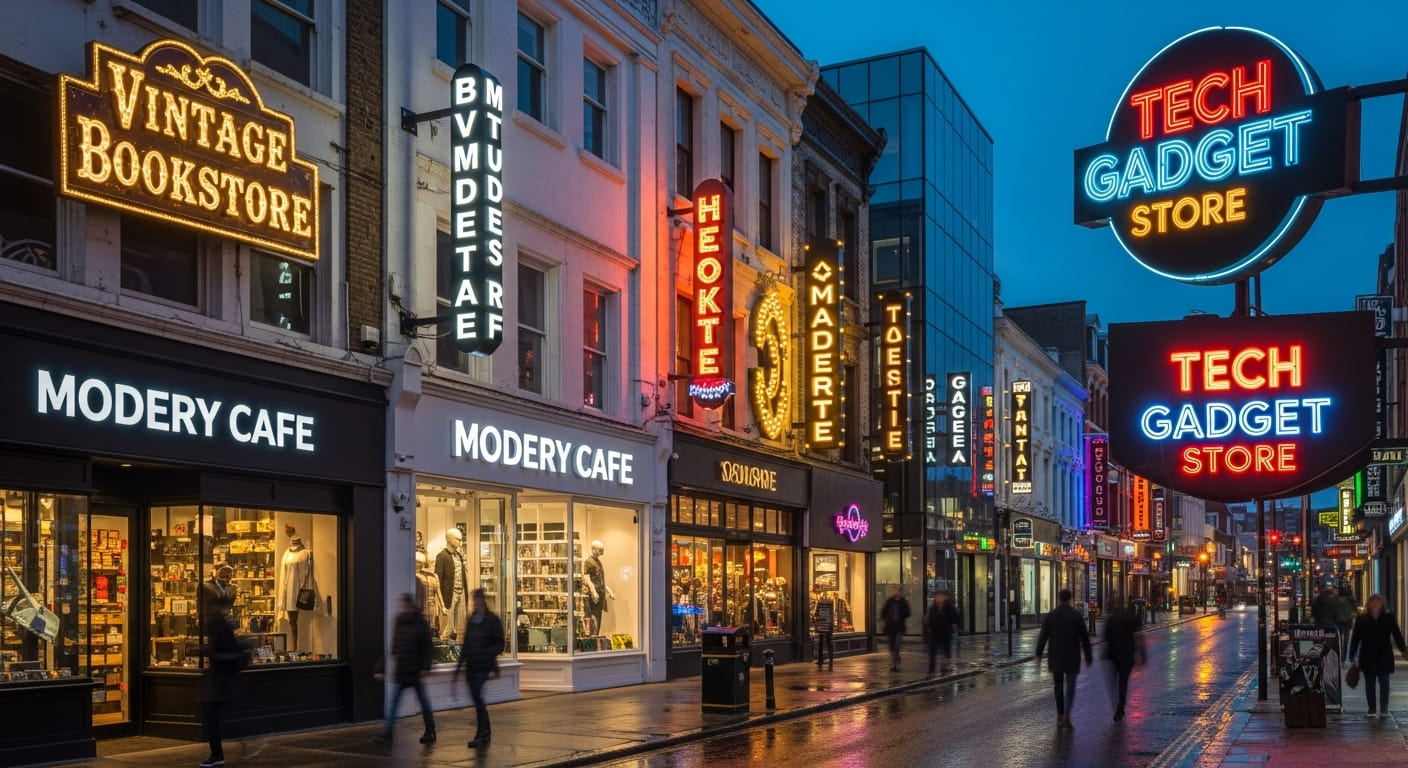
The streets of Australian cities like Melbourne, Sydney, and Brisbane are alive with activity. From the bustling cafe culture in laneways to the high-end fashion boutiques on the main strips, business owners are constantly competing for attention. In this crowded visual landscape, a flat, printed sign often fades into the background. To truly stand out and capture the interest of passersby, your brand needs depth, dimension, and light. This is why 3d illuminated letter signs have become the gold standard for modern business branding.
A sign is more than a label on a building; it is the handshake of your business. It is the first interaction a potential customer has with your brand. When that interaction involves a high-quality, glowing, three-dimensional structure, it signals professionalism and confidence. Whether day or night, these signs work tirelessly to market your location.
This guide explores the mechanics, styles, and strategic advantages of using three-dimensional signage in the Australian market, helping you understand how to turn your logo into a physical landmark.
The Power of Dimension and Light
Human eyes are naturally drawn to contrast and depth. A flat sign relies entirely on color and graphic design to catch the eye. However, 3d illuminated letter signs use physical space to create shadows and highlights that change throughout the day. When you add internal lighting to this mix, you create a beacon that commands attention.
In the retail and hospitality sectors, this visibility is vital. Imagine walking down a street at dusk. The businesses with standard painted signs start to disappear into the gloom. In contrast, a restaurant or shop with bright, fabricated letters pops out against the darkening sky. This extended visibility effectively increases your trading hours by keeping your brand visible long after the sun goes down.
For Australian businesses, where evening trade and “night economy” are significant parts of our lifestyle, having signage that performs 24/7 is a strategic asset. It ensures that even when your doors are closed, your marketing is still active.
Popular Styles of Illumination
Not all illuminated signs look the same. The way the light interacts with the letters can change the entire mood of your branding. Choosing the right style is about matching the technology to your business personality.
Face Lit Letters
This is the most common and recognizable style. In this design, the front face of the letter is made from translucent acrylic, while the sides (returns) and back are opaque. The light shines directly out through the front.
- Best for: Maximum brightness and readability.
- Vibe: Bold, energetic, and open.
- Usage: Common in retail chains, fast food, and large-format retailers who want to be seen from a distance.
Halo Lit (Back Lit) Letters
For a more subtle and sophisticated look, many high-end brands choose halo illumination. Here, the front and sides of the letter are opaque (often metal), and the back is open or covered with clear acrylic. The light shines out the back and reflects off the wall behind the letter, creating a glowing “halo” effect.
- Best for: Creating a premium, upscale atmosphere.
- Vibe: Elegant, mysterious, and modern.
- Usage: Popular with law firms, luxury fashion boutiques, and fine dining establishments.
Side Lit and Edge Lit
These are modern variations where the light escapes from the sides of the letters or through the edges of thick acrylic. It creates a crisp, architectural look that is very distinct.
- Best for: Intricate logos and indoor positioning.
- Vibe: Artistic and contemporary.
Open Face Neon Style
This style mimics the look of traditional glass neon but uses modern LED technology. The letter has no front face, leaving the light source visible.
- Best for: Retro or industrial themes.
- Vibe: Nostalgic, gritty, and cool.
Material Selection for the Australian Climate
When commissioning 3d illuminated letter signs in Australia, you must consider the environment. Our climate is harsh, characterized by intense UV radiation, high heat, and, in coastal areas, salt spray. Using inferior materials will lead to fading, cracking, or rusting within a short period.
Acrylics and Plastics:
The face of the letters is usually made from acrylic. It is critical to use UV-stable acrylics. Cheaper plastics will turn yellow and brittle under the Australian sun. High-quality perspex retains its color and clarity for years.
Metals:
The “returns” (the sides of the letters) are often fabricated from aluminium or stainless steel. Aluminium is a favorite in the local signage industry because it is lightweight, strong, and naturally resistant to rust. If you are located near the ocean, marine-grade stainless steel might be necessary to prevent corrosion.
Lighting Components:
Modern signs use LED modules rather than old-fashioned fluorescent tubes or glass neon. LEDs are robust and operate at low voltage. However, the quality of the LED module matters. It needs to be waterproof (IP rated) to withstand torrential rain and humidity.
Navigating Council Regulations and Permits
Before you bolt anything to your building, you need to navigate the regulatory landscape. In Australia, outdoor advertising is regulated by local councils and state planning laws. What you are allowed to put up depends on your zone (commercial, residential, or industrial) and the size of the sign.
Visual Amenity:
Councils are concerned with “visual amenity.” They want to ensure your sign does not clutter the streetscape or look out of place. 3d illuminated letter signs are often looked upon favorably by councils because they are viewed as high-quality, architectural additions rather than cheap, temporary clutter.
Brightness and Safety:
If your business is near a main road, there are strict rules about brightness. A sign that is too bright can distract drivers. Flashing or strobing lights are heavily restricted in traffic zones. Most modern LED systems can be fitted with dimmers or timers to ensure compliance with these safety standards.
The Application Process:
Working with a professional signage company like Swift Signs simplifies this process. They can create technical drawings showing exactly how the sign will look on the building, which is usually required for the permit application. Skipping this step can lead to fines or being forced to remove the sign.
Energy Efficiency and Sustainability
Running costs are a genuine concern for Australian business owners. Electricity prices have risen, and everyone is looking for ways to reduce overheads.
The shift from neon to LED has revolutionized the industry. LED modules used in 3d illuminated letter signs are incredibly energy efficient. They consume a fraction of the power of older lighting methods.
- Longevity: Quality LEDs can last for tens of thousands of hours. This reduces the need for maintenance visits to replace blown bulbs.
- Low Voltage: Because they run on low voltage (usually 12V or 24V), they are safer to work with and put less strain on your building’s electrical infrastructure.
- Sustainability: Less power consumption means a smaller carbon footprint for your business.
The Fabrication Process
Creating these signs is a blend of digital precision and craftsmanship. It starts with a vector design of your logo. This design is fed into CNC routers or laser cutters that slice the acrylic and metal with perfect accuracy.
The “returns” are then bent to shape. This is often done by hand or with specialized bending machines to match the curves of the letters exactly. The backplate is attached, the LEDs are installed and wired, and finally, the face is secured.
The result is a seamless, hollow shell that houses the light. When you order 3d illuminated letter signs from a reputable provider, you are paying for this build quality—ensuring no light leaks from the cracks and that the finish is smooth and flawless.
Questions and Answers: Common Questions About 3d illuminated letter signs in Australia
Q: Do I need a planning permit for a 3D illuminated sign?
A: In most cases, yes. If the sign is visible from a public space or road, you will likely need approval from your local council. The requirements vary between councils and specific zones. It is best to consult with your signage provider early in the process, as they can often assist with the drawings and documentation needed for the application.
Q: How long do the LED lights inside the letters last?
A: Modern LED modules are designed for longevity. You can typically expect them to last between 50,000 to 100,000 hours of use. If you run your sign for 12 hours a day, this translates to over ten years of service. The drivers (power supplies) may need replacing sooner, but the lights themselves are very durable.
Q: Can I match the lighting color to my specific brand colors?
A: Absolutely. We can achieve brand consistency in two ways. We can use colored LEDs, or more commonly, we use white LEDs behind colored translucent acrylic or vinyl. This allows us to match specific Pantone colors so that your 3d illuminated letter signs look exactly like your official branding, day or night.
Q: Is halo-lit signage visible during the day?
A: Halo-lit signs are most effective in low light or at night. During the bright Australian day, the “halo” effect is less visible against the wall. To ensure daytime visibility, we often use contrasting colors for the letters themselves (e.g., black letters on a white wall) so they stand out physically, even when the lights aren’t the main feature.
Q: How do you hide the electrical wires?
A: A professional installation is clean and tidy. Ideally, we drill through the wall behind each letter and push the wires through to the ceiling cavity or inside the wall, so no cables are visible from the street. If access behind the wall is impossible, we can mount the letters to a “raceway” or backing panel that houses the wiring, which is then painted to match the building facade.
Conclusion: Your Path to a Successful 3d illuminated letter signs in Australia
Investing in high-quality signage is investing in the long-term visibility of your business. In a competitive market, you cannot afford to be invisible. 3d illuminated letter signs offer a powerful combination of durability, aesthetic appeal, and 24-hour marketing potential. They elevate a brand from being just another shop on the street to being a landmark.