


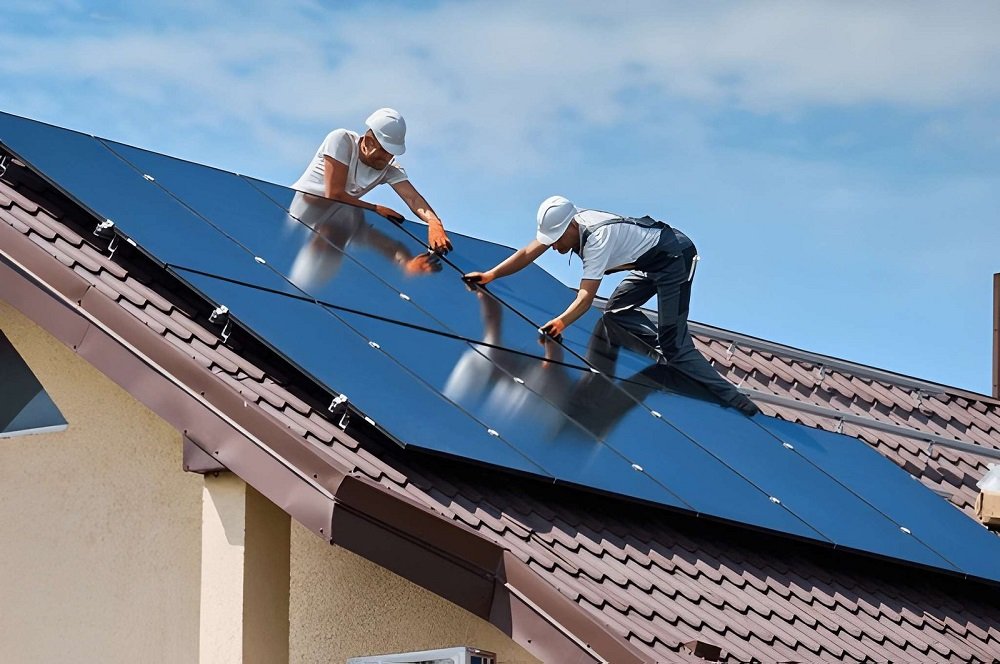
If you’re pricing solar in Australia in 2026, the headline number is fairly simple: a professionally installed 6.6kW system generally costs about $5,500–$9,000 after the federal STC incentive, while a quality 10kW system is typically around $8,000–$13,000. Bigger systems can cost more than $15,000, while batteries, premium hardware and difficult roofs can push the total considerably higher.
The more useful question isn’t simply “How much do solar panels cost?” It’s how much will the system cost me, how much electricity will it replace, and how quickly will it pay for itself?
That’s where solar pricing gets interesting in 2026.
Australia’s rooftop solar market is continuing to move toward larger systems. The Clean Energy Regulator reported an average small-scale solar installation size of 10.3kW in Q1 2026, with systems between 15kW and 40kW accounting for 22% of installations. At the same time, the federal Small-scale Renewable Energy Scheme is gradually reducing its support as the 2030 end date approaches.
So don’t compare a 2026 quote with a five-year-old solar quote and assume the cheaper number is automatically better.
The system may be bigger. The panels may be better. The battery economics may be completely different.
Solar Installation Cost in Australia in 2026
Here’s a practical starting point for homeowners and small property owners.
| System Size | Typical Gross Cost Before STCs* | Approx. Cost After STCs | Suitable For |
| 3kW | $4,000–$5,500 | $3,000–$4,000 | Small home, apartment or low electricity use |
| 6.6kW | $7,000–$10,500 | $5,500–$9,000 | Typical 2–4 person household |
| 8kW | $9,000–$12,500 | $7,000–$10,000 | Larger household, higher daytime usage |
| 10kW | $10,500–$15,500 | $8,000–$13,000 | Large home, EV, pool or high electricity use |
| 15kW+ | $15,500–$22,000+ | $12,000–$18,000+ | Large homes, acreage or small businesses |
*Gross figures are indicative market estimates before the federal STC discount. Actual STC value depends on factors including system capacity, location, installation date and certificate market conditions.
Current Australian market data supports a $5,500–$9,000 range for quality 6.6kW systems and roughly $8,000–$13,000 for 10kW systems, including installation and the applicable solar rebate.
A 3kW system can currently be around $3,000–$4,000 installed, but it’s increasingly a small system by Australian standards. Solar Quotes notes that modern households are increasingly choosing 6.6kW, 10kW or larger systems because system costs have fallen.
Why 6.6kW isn’t necessarily the “standard” anymore
For years, 6.6kW became the sweet spot for Australian homes. It still makes financial sense for many properties, but the calculation has changed.
If your house has:
- ducted air conditioning
- a pool
- electric hot water
- an EV
- induction cooking
- a home office
- high daytime electricity consumption
then a 10kW system may make more sense than squeezing the quote down to 6.6kW.
The extra panels don’t automatically mean extra waste. They can mean more solar available during winter, cloudy periods and shoulder hours.
What Does Cost Per Watt Mean in 2026?
Cost per watt ($/W) is one of the cleanest ways to compare solar quotes.
The calculation is straightforward:
Total installed price ÷ solar panel capacity in watts = cost per watt
For example:
A 6.6kW system costs $7,260.
6.6kW = 6,600 watts.
$7,260 ÷ 6,600 = $1.10/W
Now imagine another installer offers:
- 5.5kW for $6,500
- 6.6kW for $7,500
- 10kW for $11,000
The sticker price alone doesn’t tell you much.
Cost per watt gives you a much cleaner comparison.
| System | Price | Cost Per Watt |
| 5.5kW | $6,500 | $1.18/W |
| 6.6kW | $7,500 | $1.14/W |
| 10kW | $11,000 | $1.10/W |
SolarQuotes also recommends cost-per-watt as a useful comparison metric when assessing different system sizes.
But there’s a catch.
Don’t choose the cheapest $/W quote automatically.
A $1.00/W system using bargain equipment and an inexperienced installer isn’t necessarily better value than a $1.30/W system using higher-quality components, better warranties and a stronger installation company.
What should you expect to pay per watt?
As a broad 2026 Australian benchmark:
- Budget: roughly $0.90–$1.10/W
- Mid-range: roughly $1.10–$1.40/W
- Premium: roughly $1.40–$2.00+/W
These figures are indicative rather than an official industry tariff.
Panel choice is only part of the equation. SolarQuotes’ 2026 market data illustrates the difference: a budget Jinko panel can be around $130 per panel, while premium REC panels can exceed $290 per panel. Across a large system, that difference becomes thousands of dollars.
Budget vs Mid-Range vs Premium Solar Systems
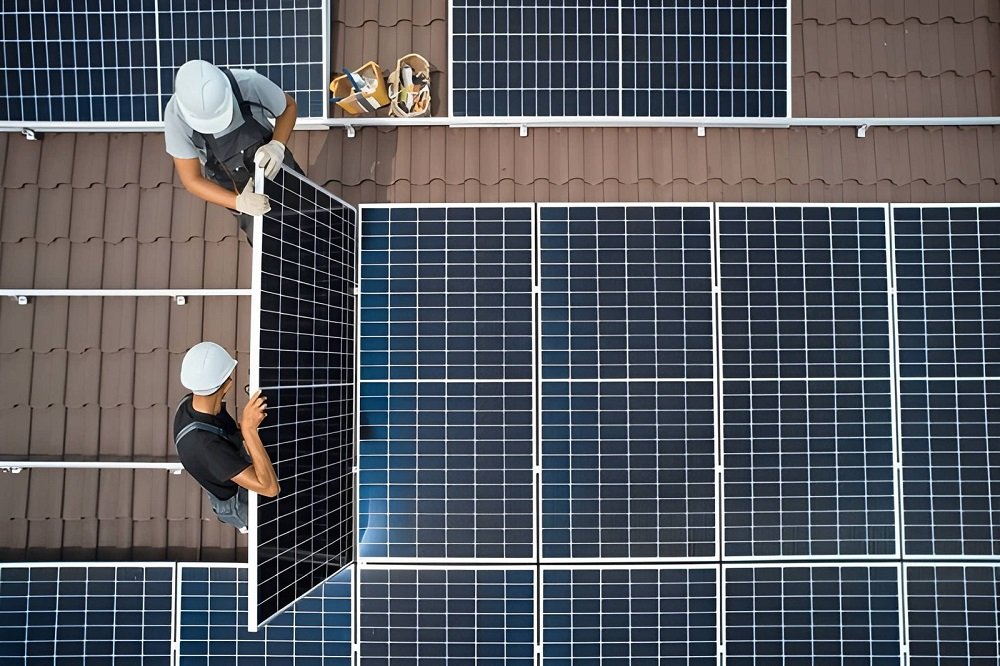
You don’t need the most expensive equipment to get a good solar system.
Budget systems
Budget systems typically use established mass-market panels and a conventional string inverter.
Common examples include brands such as:
- Jinko
- Trina
- LONGi
- other CEC-approved value-oriented products
A good budget system isn’t necessarily a bad system.
The real question is whether the installer, design, electrical work and warranty support are good.
Mid-range systems
This is where many homeowners should probably spend their time.
You may get:
- better inverter technology
- higher-efficiency panels
- stronger warranties
- better monitoring
- improved performance in difficult roof layouts
The price premium isn’t huge compared with moving all the way into the luxury end of the market.
Premium systems
Premium equipment can make sense where roof space is limited or long-term performance matters more than upfront cost.
REC is a common example of a premium panel brand.
Older comparisons may also refer to SunPower, although the SunPower/Maxeon brand landscape has changed, so buyers should check the actual manufacturer, model and warranty offered rather than relying on the brand name alone.
Premium panels can offer higher efficiency, lower degradation and stronger warranties, but that doesn’t mean they’ll produce enough additional electricity to justify the extra purchase price on every roof.
What Actually Determines Solar Installation Cost?
The panels you see on the roof are only one part of the invoice.
-
Roof Size and Complexity
A simple single-storey tiled roof is cheap to work on.
A steep, multi-level roof with several orientations is not.
Installers may charge more where there’s:
- steep roof pitch
- two-storey access
- difficult scaffolding
- multiple roof sections
- tile replacement
- metal roofing complications
- asbestos-related concerns
- long cable runs
- restricted access
- significant shading
Two homes can have identical 10kW systems and receive very different quotes.
That’s normal.
Roof orientation matters too
A north-facing roof isn’t automatically the only good option.
East- and west-facing panels can be valuable because they produce more energy during morning and afternoon periods when household electricity demand may be higher.
For someone working from home, running air conditioning in the afternoon or charging an EV after work, a west-facing array may have more practical value than a theoretical “perfect” north-facing design.
-
Panel Brand and Efficiency
Panel efficiency affects how much electricity you can produce from a limited roof area.
Suppose you have only 35 square metres of usable roof.
Higher-efficiency panels may allow you to install more capacity without needing additional roof space.
But if you have a huge roof, paying thousands extra for premium efficiency may not provide the same financial return.
That’s why roof space should be part of the financial calculation.
-
Inverter Technology
The inverter converts the electricity generated by your panels into electricity your home can use.
There are three common configurations.
String inverter
A string inverter connects groups of panels together.
Advantages:
- generally lower cost
- proven technology
- relatively straightforward servicing
- good choice for uncomplicated roofs
Disadvantages:
- shading can affect a string
- different roof orientations require careful design
- one central inverter is a single major point of failure
For a simple, unshaded roof, a good string inverter can be perfectly sensible.
Microinverters
Microinverters are installed at panel level.
They cost more, but they can make sense when:
- the roof has multiple orientations
- shading is unavoidable
- panel-level monitoring matters
- roof space is complicated
Microinverters can add a meaningful premium to the installation. Historical Australian market guidance has put the increase at roughly 20–30% compared with conventional central-inverter systems, although the actual difference depends heavily on system design and equipment.
Hybrid inverter
A hybrid inverter can manage solar generation and battery storage.
If you’re certain you’ll add a battery later, installing a battery-compatible architecture from the start may avoid some future equipment costs.
That’s worth discussing before you sign the contract.
Solar Battery Add-On Cost in 2026
A solar battery changes the economics considerably.
A typical 5–15kWh battery installation can add roughly $6,000–$14,000+, depending on capacity, brand, inverter requirements, electrical work and whether government support applies.
Current Australian battery pricing is broad. SolarQuotes’ 2026 market data shows battery equipment prices ranging from several thousand dollars to well above $10,000, depending on capacity and brand, while its installed-cost examples include installation allowances and the federal battery rebate.
For example, current market listings include:
- around $7,200 for an Enphase IQ Battery 5P
- around $10,000 for a Tesla Powerwall 3 including Gateway
- around $5,100 for a Neovolt 10kWh battery
- around $5,300 for an Anker SOLIX X1 10kWh system
Actual installed pricing varies, and these figures shouldn’t be treated as like-for-like quotes.
Don’t automatically buy the biggest battery
This is one of the easiest ways to overspend.
If your house only has 5kWh of usable evening demand, a 20kWh battery may spend much of its life under-utilised.
The better question is:
How much excess solar do I regularly have, and how much electricity do I need after the sun goes down?
What Changed With the Federal Battery Rebate in 2026?
Australia’s Cheaper Home Batteries Program provides support for eligible small-scale battery systems connected to new or existing rooftop solar.
The federal government describes the program as providing around a 30% discount on eligible battery installation costs, generally delivered through retailers and installers rather than as a separate cheque to the homeowner.
But there’s an important 2026 change.
From 1 May 2026, the battery STC calculation became tiered:
- first 14kWh: 100% of the applicable STC factor
- above 14kWh to 28kWh: 60%
- above 28kWh to 50kWh: 15%
The STC factor also changed from 8.4 for January–April 2026 to 6.8 for May–December 2026.
That makes very large batteries less attractive from an incentive perspective.
The program isn’t saying you can’t buy a large battery. It’s saying the subsidy doesn’t scale at the same rate beyond certain capacity thresholds.
Soft Costs You Don’t See on the Roof
A solar quote also contains a lot of work that never appears in the product brochure.
This can include:
- electrical labour
- system design
- site inspection
- engineering
- roof mounting
- cable installation
- isolators and protection equipment
- meter work
- grid connection administration
- compliance documentation
- commissioning
- monitoring setup
- warranty administration
- scaffolding or access equipment
That’s why comparing the price of panels alone is almost meaningless.
You’re buying an installed energy system, not a stack of panels.
Why Some Solar Quotes Are Thousands Apart
Suppose you receive these three quotes for a 10kW system:
Quote A — $8,200
- budget panels
- basic string inverter
- standard roof
- limited inclusions
Quote B — $10,800
- reputable panels
- quality inverter
- experienced installer
- better monitoring
- stronger warranty support
Quote C — $15,500
- premium panels
- premium inverter
- panel-level optimisation
- complex roof
- upgraded electrical equipment
It would be a mistake to call Quote A “cheap” and Quote C “expensive” without understanding what’s included.
The right question is:
What exactly am I getting for the extra $7,300?
If the answer is mostly branding, think twice.
If the answer is a difficult installation, better hardware, better warranties and substantially improved production, the premium may be reasonable.
Solar Payback Period in 2026
The solar payback period is the time it takes for electricity savings and export income to recover your initial investment.
A simple calculation looks like this:
Payback period = Net system cost ÷ annual financial benefit
But don’t use the entire solar generation figure as your annual saving.
That’s a common mistake.
A Practical 8kW Example
Imagine a Melbourne household installs an 8kW solar system for $9,000 after incentives.
Assume:
- annual solar production: 10,400kWh
- 60% used directly in the home
- 40% exported
- electricity purchase price: 32c/kWh
- feed-in tariff: 5c/kWh
The calculation would look roughly like this:
Electricity used directly
10,400 × 60% = 6,240kWh
6,240 × $0.32 = $1,997
Electricity exported
10,400 × 40% = 4,160kWh
4,160 × $0.05 = $208
Approximate annual value
$1,997 + $208 = $2,205
Now divide:
$9,000 ÷ $2,205 = approximately 4.1 years
So the simple payback is around four years under these assumptions.
That’s why good residential solar can still produce attractive economics in 2026.
But don’t take the four-year number as a promise.
Real-world payback depends on:
- electricity prices
- feed-in tariff
- household consumption
- solar production
- shading
- system degradation
- system price
- financing costs
- battery use
- future tariff changes
A reasonable broad expectation for many well-designed Australian residential systems is around 4–7 years, but some properties will fall outside that range.
What Could Solar Save Over 25 Years?
Take the same example.
Annual energy value:
$2,205
Over 25 years:
$55,125
That’s before accounting for:
- panel degradation
- inverter replacement
- changing electricity prices
- changing feed-in tariffs
- maintenance
- financing
- opportunity cost of capital
So don’t advertise a “$55,000 guaranteed saving.”
That’s not how solar economics works.
Instead, treat it as a scenario-based lifetime value estimate.
If electricity prices rise, the value of the solar energy you consume yourself can increase.
If feed-in tariffs fall, exporting excess solar becomes less valuable.
That makes self-consumption increasingly important.
Solar vs Battery: Which Gives Better ROI?
This depends on your consumption profile.
Imagine two households.
House A
Most people leave for work at 8am.
They use little electricity during the day and return around 6pm.
Solar production is high while they’re away.
A battery can capture some of that surplus energy and shift it into the evening.
House B
Someone works from home.
They run:
- air conditioning
- computers
- washing machine
- dishwasher
- pool pump
during the day.
They may already consume a large proportion of their solar generation directly.
For House B, adding a battery may provide less incremental financial benefit.
This is why solar battery payback can’t be calculated from battery size alone.
Solar Incentives, Rebates and Government Support in 2026
Australia doesn’t operate a single US-style federal residential solar tax credit.
Instead, the main federal mechanism for rooftop solar is the Small-scale Renewable Energy Scheme (SRES).
Small-scale Technology Certificates
Eligible solar installations receive Small-scale Technology Certificates (STCs).
The number of STCs depends on factors such as:
- system capacity
- location
- installation date
- expected renewable generation
- applicable deeming period
Most homeowners don’t personally trade the certificates.
Instead, the installer or registered agent usually claims them and gives you the value as an upfront discount.
The 2026 STC situation
The solar STC deeming period is falling as the SRES approaches its scheduled end in 2030:
| Installation Year | Deeming Period |
| 2025 | 6 years |
| 2026 | 5 years |
| 2027 | 4 years |
| 2028 | 3 years |
| 2029 | 2 years |
| 2030 | 1 year |
That means the incentive generally becomes smaller for otherwise comparable installations as the decade progresses.
For a 10kW system, current market estimates put the 2026 solar rebate at roughly $2,500–$3,000, although the actual amount varies with location and certificate value. SolarQuotes estimates around $2,500 for a 10kW system in its 2026 pricing analysis.
State and Local Solar Rebates
Federal support isn’t the whole story.
Some states, territories and councils provide additional assistance.
Victoria
Victoria is particularly relevant because its Solar Homes Program continues to provide support for eligible households.
From 1 July 2026, the combined household income eligibility threshold for the solar PV and hot-water rebates changed from $210,000 to $150,000. The maximum solar PV rebate remains up to $1,400, with an equivalent interest-free loan option available for eligible applicants.
Solar Victoria also says its battery interest-free loan program is no longer accepting new applications, while the federal Cheaper Home Batteries Program continues.
Other states and councils have their own programs, and these can change during the year.
The Australian Government specifically recommends checking state, territory and local government programs in addition to the federal SRES and battery scheme.
Don’t assume a rebate is guaranteed
Before using a rebate in your financial calculation, check:
- eligibility
- household income limits
- property requirements
- approved equipment
- installer accreditation
- application deadlines
- whether funds are still available
A rebate advertised on an old solar company’s blog isn’t evidence that the rebate still exists.
What About Tax Benefits for Small Businesses?
A small business should look at solar differently from a homeowner.
The system may be a business asset, which can potentially have tax and depreciation implications depending on how the asset is used, the business structure and the tax rules applying in the relevant income year.
Don’t assume a solar installation automatically qualifies for a particular instant write-off.
The Australian Taxation Office says depreciation and simplified-depreciation treatment depends on the asset, eligibility and when it is first used or installed ready for use.
For a commercial solar project, it’s worth asking your accountant to model:
- GST treatment
- depreciation
- business-use percentage
- electricity savings
- export income
- financing costs
- asset life
- battery treatment
For a $20,000+ commercial installation, getting the tax treatment right can materially affect the investment calculation.
How to Compare Solar Quotes Properly
Don’t compare quotes by total price alone.
Create a spreadsheet with these columns:
| Item | Quote A | Quote B | Quote C |
| System size | |||
| Panel brand/model | |||
| Panel efficiency | |||
| Inverter brand/model | |||
| Inverter type | |||
| Battery | |||
| Battery usable capacity | |||
| Installation | |||
| Switchboard work | |||
| Monitoring | |||
| Warranty | |||
| STC discount | |||
| Final price | |||
| Cost per watt | |||
| Estimated annual generation |
Then ask each installer the same questions.
Questions worth asking
- What is the exact panel model?
- What is the exact inverter model?
- Is the quoted price after STCs?
- Are electrical upgrades included?
- Are meter or grid-connection costs included?
- What happens if the roof needs additional work?
- Who handles warranty claims?
- What happens if the installer closes down?
- What annual generation do you expect?
- What assumptions were used to calculate savings?
- Is battery installation included or future-ready?
- Are there export limitations at my property?
- Is monitoring included?
The best solar quote is the one you can understand.
Five Red Flags in a Solar Quote
- The quote is dramatically cheaper than everyone else
A low price isn’t automatically bad.
But if three reputable installers quote $8,000–$10,000 and someone offers $4,500, find out why.
Something is different.
- No exact model numbers
“Tier 1 panels” isn’t a product specification.
Ask for the actual model.
- Huge savings claims
If a salesperson says your electricity bill will “disappear”, ask for the calculation.
Solar doesn’t eliminate grid connection charges, and households still buy electricity when solar production isn’t enough.
- Battery sold purely on backup
A battery can provide backup, but not every battery installation will automatically keep your whole house running during an outage.
Ask:
Which circuits are backed up?
- The installer can’t explain the system
You don’t need the salesperson to be an electrical engineer.
But they should be able to explain the system design clearly.
If they can’t tell you why they’ve recommended 6.6kW instead of 10kW, that’s a problem.
Is a Bigger Solar System Always Better?
No.
But a larger system can be better value per watt.
A 10kW installation doesn’t cost 50% more than a 6.6kW system even though it has around 51% more panel capacity.
That’s because some costs are relatively fixed:
- installer travel
- electrical work
- paperwork
- inverter installation
- scaffolding
- system design
Adding additional panels doesn’t necessarily add the same percentage to the total installation cost.
That’s one reason Australian households have been moving toward larger systems. The Clean Energy Regulator reported that the average small-scale system reached 10.3kW in Q1 2026.
What Should You Budget for Solar in 2026?
For a straightforward Australian home, these are sensible starting budgets:
Small home
3kW: approximately $3,000–$4,000 after STCs
Average household
6.6kW: approximately $5,500–$9,000 after STCs
High-use household
8–10kW: approximately $7,000–$13,000 after STCs
Large home or small business
15kW+: approximately $12,000–$18,000+ after applicable incentives
Solar + battery
Add approximately $6,000–$14,000+ for a typical battery installation, depending on capacity, equipment, installation complexity and incentives.
These numbers are useful for budgeting—not for replacing a site-specific quote.
FAQs: Solar Installation Cost 2026
Q1: How much does a solar system cost on average in 2026?
A quality 6.6kW solar system generally costs around $5,500–$9,000 installed after applicable STCs, while a 10kW system commonly costs around $8,000–$13,000. A 3kW system can cost approximately $3,000–$4,000, while 15kW+ systems can exceed $12,000–$18,000 depending on equipment and installation requirements.
Q2: Is solar still worth the investment in 2026 with rising grid prices?
For many Australian households, yes, particularly where a significant amount of solar electricity is consumed directly rather than exported.
A well-sized system can often achieve a simple payback of approximately 4–7 years, although the actual result depends on installation cost, electricity rates, household consumption, solar production and feed-in tariffs.
The strongest financial case usually comes from replacing electricity that you would otherwise buy from the grid.
Q3: How much extra does adding battery storage cost in 2026?
A typical residential battery can add approximately $6,000–$14,000+, depending on capacity, brand, inverter configuration and installation requirements.
The federal Cheaper Home Batteries Program provides support for eligible systems, with the government targeting roughly a 30% discount through the SRES mechanism. Battery STC calculations changed on 1 May 2026, with lower support applied to capacity above 14kWh and 28kWh thresholds.
Q4: What is the typical payback period for residential solar?
A reasonable 2026 planning range is around 4–7 years for many well-designed residential systems.
However, don’t use an industry average as your personal forecast.
Calculate your expected annual solar production, estimate how much electricity you’ll consume directly, apply your electricity tariff and feed-in tariff, and then divide the net system cost by the estimated annual benefit.
Q5: What is the difference between string inverters and microinverters in terms of price and value?
String inverters are usually cheaper and work very well on simple, unshaded roofs.
Microinverters cost more, but can make sense where panels face different directions or experience shading because each panel has its own inverter.
Australian market guidance has historically put microinverter systems at roughly 20–30% more than conventional central-inverter systems, although the actual premium varies by equipment and installation.
For a simple roof, a good string inverter may provide better financial value. For a complicated roof, the additional cost of microinverters can be easier to justify.
Sources used for the 2026 figures
The pricing and incentive figures above are based primarily on current Australian market and government sources, including the Clean Energy Regulator, Australian Government Department of Energy, Solar Victoria, and 2026 Australian solar pricing data from SolarQuotes. The federal STC system and battery incentives are subject to legislative and market changes, so homeowners should verify the applicable incentive at the time they sign a contract.