


Gas ducted heating is the go-to solution for many Aussie families who want whole-home warmth without a rack of portable units. Below we’ll walk through the three biggest pitfalls that can turn a smooth install into a nightmare, & we’ll show you how to dodge them before they bite. From sizing to service, the advice is rooted in real-world experience across Sydney, Melbourne, Brisbane and Perth.
Understanding How Gas Ducted Heating Works
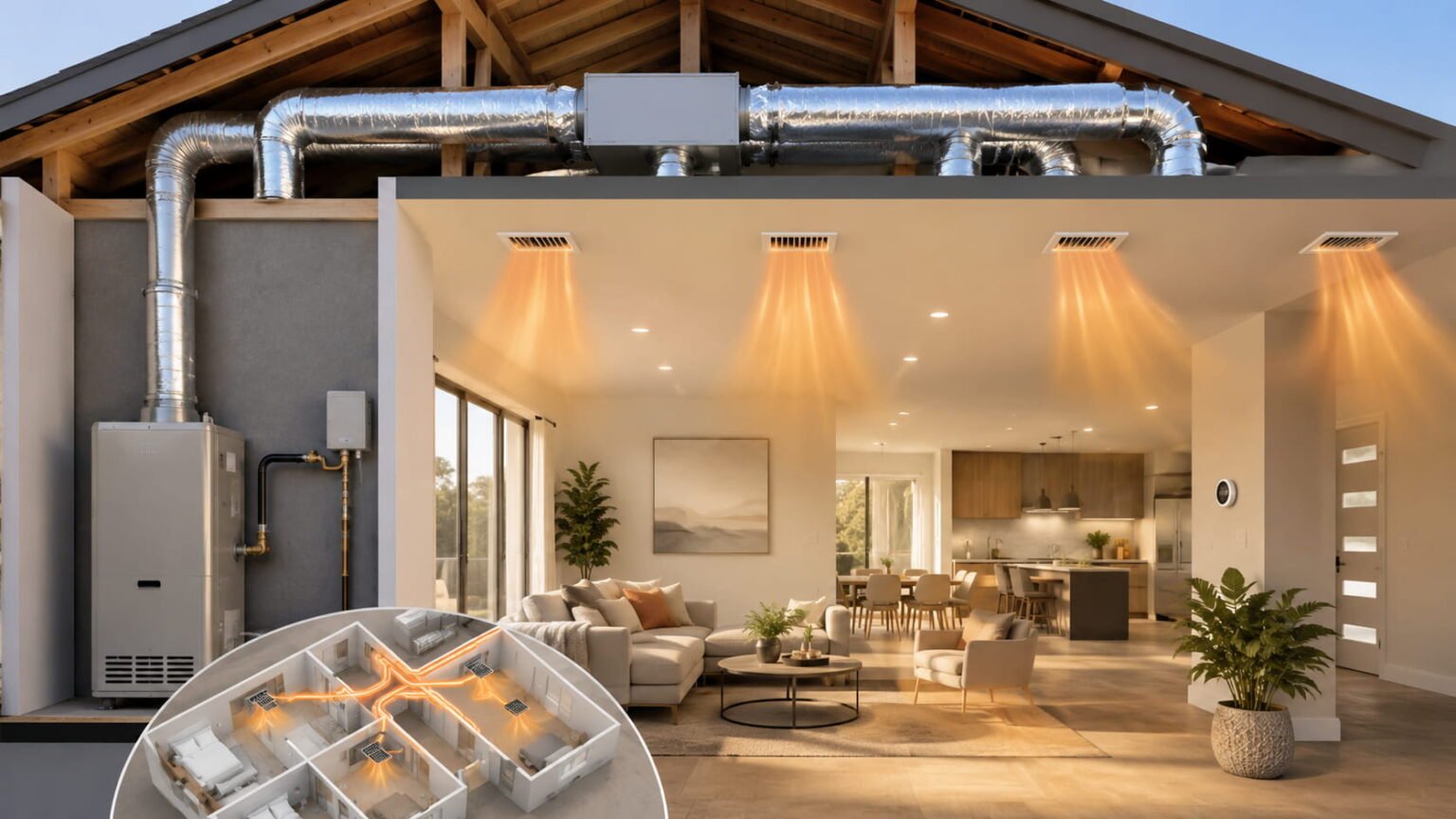
Before you can avoid mistakes you need to know what you’re dealing with. See a gas ducted heating system consists of a central heater, heat exchanger, fan insulated ducts & a set of vents in each room. The heater burns natural gas or LPG the heat exchanger warms the air the fan pushes it through the ducts and the vents deliver the warm air where you need it.
- The central heater sits in a roof void, under-floor space or a dedicated plant room – a location that’s easy to service.
- Ducts are usually metal or flexible insulated pipe; they keep heat loss low and help the fan maintain steady pressure.
- Vents can be single-speed or variable-speed, allowing you to fine-tune temperature room by room.
- Modern units come with Wi-Fi thermostats that let you control set-points from your phone, even when you’re at the beach.
What typically happens is the system kicks on when the thermostat drops below the set temperature, then runs until the space reaches comfort — Because the whole house is heated from one point, you see a quick rise in temperature compared to a few portable electric heaters fighting for space.
Mistake 1 – Poor Sizing and Duct Design
From what I’ve seen, the most common error is installing a unit that’s too small or too large for the home, or running ducts that are undersized. A mismatched system wastes gas, makes the fan work harder and can leave cold spots in the living room or upstairs bedroom.
- Take the floor area, ceiling height and insulation level into account – a two-storey house in the Hills District of Sydney needs a bigger capacity than a single-storey bungalow in Adelaide.
- Check the duct run length. Long runs lose more heat; a well-designed layout keeps the ducts short and straight wherever possible.
- Balance the supply and return ducts. If the return is too small, the fan will struggle to pull air, causing noise and reduced efficiency.
- Use insulated ducts, especially in colder climates like Canberra, to prevent heat loss along the way.
The thing is, a professional installer will run a pressure test and a smoke test to locate leaks before you ever turn the system on. Skipping that step can lead to drafts and higher gas consumption.
Mistake 2 – Ignoring Regular Maintenance
Honestly, many homeowners treat their gas ducted heating like a set-&-forget appliance. That attitude drives up running costs and shortens the life of the unit. A clean heat exchanger & clear filters are the backbone of efficient operation.
- Swap out the air filter every three months during heating season – a clogged filter forces the fan to work harder.
- Schedule a professional cleaning of the heat exchanger at least once a year; dust buildup can cause hot spots and carbon monoxide risks.
- Inspect duct seals around the roof & walls. Even a tiny leak can waste up to 15 % of the heat you paid for.
- Lubricate the fan motor if the manufacturer recommends it – a silent fan means less wear and lower energy use.
In my experience, homeowners who keep a simple maintenance log never face unexpected breakdowns — The peace of mind is worth the few minutes of effort each month.
Mistake 3 – Overlooking Safety Sensors and Carbon Monoxide Monitoring
Gas appliances can be hazardous if the safety devices are missing or faulty. The most important piece of hardware is the carbon monoxide (CO) detector, paired with a flame-failure sensor on the heater.
- Install a CO detector in the main living area and another near the sleeping quarters – they’re cheap, battery-powered & give early warning.
- Make sure the flame-failure sensor is calibrated during each service – it shuts the gas valve if the pilot goes out.
- Check that the venting pipe is clear of debris & not blocked by bird nests, especially in coastal suburbs like Fremantle.
- Test the alarm monthly; a simple button press will confirm it’s working.
Skipping these checks can turn a cozy home into a dangerous one. A quick test before winter starts saves you from costly repairs and potential health hazards.
Choosing the Right System for Australian Climate
Australia’s climate varies from the tropical north to the temperate south, so a one-size-fits-all approach rarely works. In Sydney’s mild winters, a compact gas furnace from Rinnai can handle the load, while a larger unit from Braemar may be needed for a sprawling family home in the suburbs of Melbourne.
- Natural gas is widely available in urban areas like Brisbane’s inner suburbs; LPG is the fallback in regional towns such as Ballarat.
- Consider dual-comfort units that provide cooling in summer – many families in Perth appreciate the ability to switch modes without installing a separate air-conditioner.
- Look for high-efficiency models that meet the Green Star rating; they use less gas while delivering the same heat output.
- Smart thermostats from brands like Brivis let you set schedules that match your daily routine, cutting waste.
What typically happens is the right size and type of unit will keep your home at a stable 20-22 °C with minimal cycling which translates into smoother operation and lower gas use.
Maintenance Checklist and Service Tips
Here’s a quick, seasonal checklist that you can stick on the fridge. It covers everything from filter swaps to professional service calls.
- Spring: Turn off the system, clean the exterior, and schedule a professional inspection.
- Summer: If you have a dual-comfort unit, test the cooling mode and clean the evaporator coil.
- Autumn: Replace the air filter, check the CO detectors, and run a test cycle.
- Winter: Keep the thermostat set at a comfortable level monitor the fan for unusual noises and note any temperature drop in specific rooms.
The thing is a regular service contract with a local gas heating specialist in places like the Northern Beaches of Sydney or the inner northern suburbs of Melbourne can save you from emergency calls during a cold snap.
Real-World Case Study
Jane lives in a four-bedroom house on the North Shore of Sydney. She installed a Brivis gas ducted heating system three years ago, opting for a dual-comfort unit to cover both winter heating and summer cooling. Initially, she noticed uneven warmth on the upper floor, which turned out to be an undersized return duct in the hallway. After a professional re-balancing and sealing of a small roof vent leak, the temperature difference dropped from 4 °C to less than 1 °C across the whole home.
Jane also follows a simple maintenance routine: she changes the filter every two months, sets a reminder to test the CO detector each quarter, and books an annual service with a local installer in Willoughby. The result? Her gas bill stayed steady despite a colder winter, and the system has run without a hitch for three years. She credits the dual-comfort feature for eliminating the need for a separate air-conditioner, freeing up wall space in the living room.
Comparison: Gas vs Electric Ducted Heating
| Feature | Gas Ducted Heating | Electric Ducted Heating |
| Primary fuel | Natural gas or LPG | Electricity |
| Typical heating speed | Rapid warm-up (minutes) | Slower, especially in large homes |
| Operating cost (per kWh equivalent) | Lower in most Australian regions | Higher, especially during peak summer demand |
| Installation complexity | Requires venting & gas line | No venting, but needs adequate electrical capacity |
| Maintenance | Filter changes, heat exchanger cleaning | Filter changes occasional fan inspection |
| Safety considerations | CO monitoring, flame-failure sensor | Electrical safety, no CO risk |
| Best for | Large homes, families, dual-comfort needs | Small apartments, homes with limited roof space |
Conclusion
Gas ducted heating can deliver comfortable whole-home warmth while keeping your energy use in check, but only if you avoid the three costly mistakes outlined above. Get the sizing right, stay on top of maintenance, and never skip the safety sensors. Pair a well-chosen system with a smart thermostat, and you’ll enjoy consistent temperature across every room – from the kitchen in Brighton to the bedroom in Subiaco.
Take the time to schedule a professional assessment, keep a simple maintenance log, and test your CO detectors regularly. Those small steps will keep your gas ducted heating running efficiently for years, protecting both your comfort and your home’s safety.