


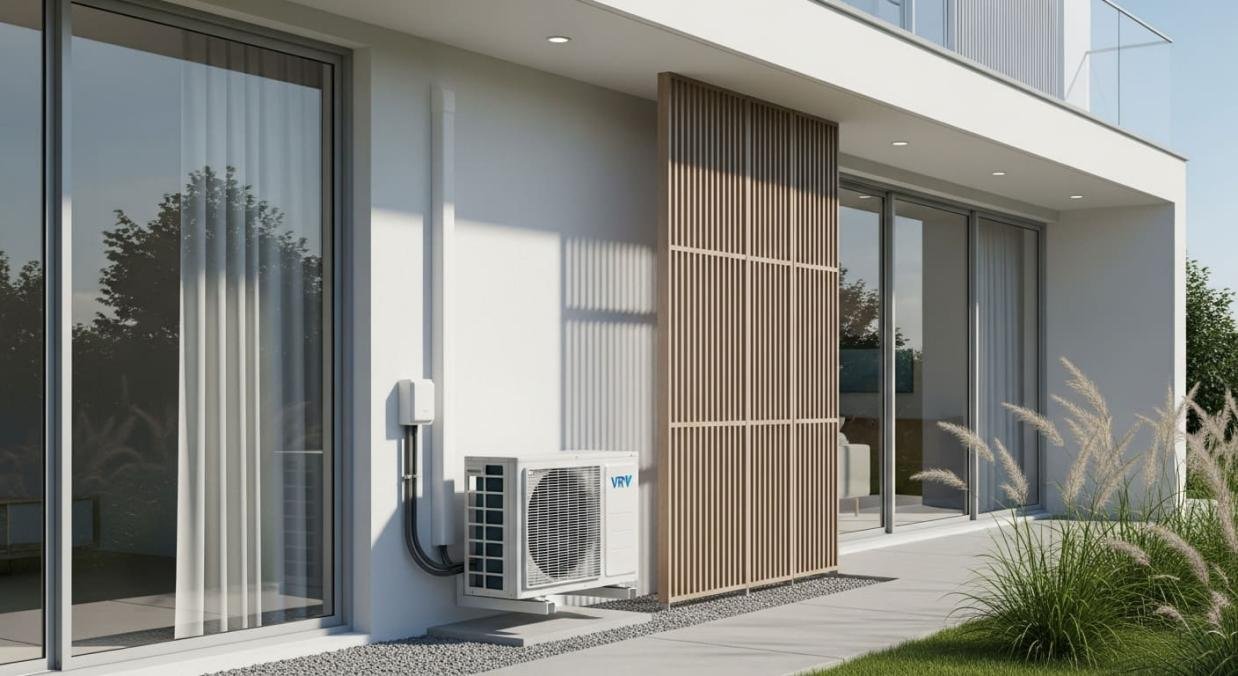
VRV air conditioning is a multi-zone, variable-refrigerant-volume climate system that connects a single outdoor condenser to many individual indoor units, each with independent temperature control. Invented by Daikin in 1982, it is the dominant heating and cooling solution for Australian mid-rise apartments, hotels, offices and large premium homes.
What Is VRV Air Conditioning?
VRV (Variable Refrigerant Volume) is a direct-expansion, refrigerant-based system in which one outdoor inverter condenser serves multiple indoor units (wall, ceiling cassette, ducted, floor-console or ceiling-suspended) via a branching pipe network. The key innovation is variable refrigerant flow: the outdoor unit modulates the exact volume of refrigerant sent to each indoor unit based on its real-time demand, rather than running at fixed output. Daikin holds the VRV trademark, so other manufacturers (Mitsubishi Electric, LG, Samsung, Panasonic, Toshiba, Fujitsu) sell the same technology under the generic name VRF. For commercial-grade vrv air conditioning supply and install, an accredited VRV specialist is essential.
What Is the Difference Between VRV and VRF?
Technically, nothing. VRV is Daikin’s trademarked name; VRF (Variable Refrigerant Flow) is the generic industry term used by all other manufacturers for the same variable refrigerant volume architecture. Both describe one outdoor condenser serving many indoor units with per-zone refrigerant metering via electronic expansion valves. In Australia, VRV is widely used as a generic term regardless of brand. The practical choice between VRV and VRF is a choice of manufacturer, not of technology.
How Much Does VRV Air Conditioning Cost in Australia?
Indicative 2026 Australian installed pricing (supply and install): a small VRV (8 hp, around 22 kW, 4-6 indoor units) costs $15,000-$28,000; a mid-range VRV (16 hp, around 45 kW, 8-12 indoor units) costs $28,000-$50,000; a large or heat-recovery VRV (24+ hp, 70 kW+) costs $50,000-$100,000+. Each additional indoor cassette adds $1,200-$2,500 installed. VRV carries a 40-80% higher upfront cost per kW than split or ducted equivalents but delivers lower running cost, 15-20 year lifespan and superior comfort control. Commercial payback against an equivalent split-system bank is usually 5-10 years on energy savings alone.
VRV vs Split System vs Ducted: Which Should You Choose?
VRV serves up to 60+ indoor units per outdoor condenser with fully independent per-zone temperature control and optional heat recovery (simultaneous heating and cooling). A multi-head split serves up to 5 indoor units with per-head control but no heat recovery. Ducted reverse-cycle serves a single duct network with limited zoning. VRV suits apartments, hotels, offices, retail and large premium homes needing 6+ zones; multi-head split suits small homes with 2-5 rooms; ducted suits single-zone whole-home comfort. VRV seasonal efficiency is typically 20-35% better than equivalent fixed-output split systems, and heat-recovery VRV can double that advantage in mixed-load buildings.
Where Does VRV Make Sense in Australia?
VRV is the standard for mid-rise and high-rise apartments (one outdoor condenser per floor or per building, each unit gets its own indoor unit), hotels and serviced apartments (per-room control with centralised monitoring), commercial offices (heat-recovery VRV excels where perimeter zones need cooling while core zones need heating), retail tenancies and shopping centres (modular, scalable, individually metered), schools and universities (per-classroom control), and large premium homes with 6+ indoor zones where ductwork would be impractical across multiple storeys.
What Are the Installation and Compliance Rules for VRV?
VRV installation is a specialist activity. The installer must hold an ARCtick refrigerant licence and significant manufacturer training (Daikin, Mitsubishi and LG all require accredited installer certification for full warranty). Key Australian requirements: commercial VRV must demonstrate NCC Section J energy-efficiency compliance including minimum EER and COP; most current systems use R32 or R454B refrigerant under Australia’s HFC phase-down; brazed copper pipework to AS/NZS 5141 with mandatory pressure testing and vacuum dehydration before commissioning; and BACnet or Modbus integration for building management systems where central monitoring is required. Service twice yearly for 15-20 year lifespan.
Frequently Asked Questions
What is a VRV air conditioning system?
VRV (Variable Refrigerant Volume) is a multi-zone inverter-driven refrigerant system where one outdoor condenser serves many indoor units, each with independent temperature control via variable refrigerant flow.
What is the difference between VRV and VRF?
Nothing technically. VRV is Daikin’s trademark; VRF is the generic name used by all other manufacturers for the same variable refrigerant volume technology.
How much does VRV air conditioning cost in Australia?
Installed pricing in 2026 starts around $15,000 for a small 4-6 indoor unit system and reaches $50,000-$100,000+ for large heat-recovery commercial systems.
Is VRV suitable for residential homes?
Yes, for large or multi-storey premium homes needing 6+ zones. Small residential VRV platforms (e.g. Daikin VRV IV-S) are designed for this market. For typical 3-bedroom homes, ducted or split systems are more cost-effective.
Does VRV use R32 refrigerant?
Most current-generation VRV systems from Daikin, Mitsubishi Electric, LG and Samsung use R32, which has roughly one-third the global warming potential of the older R410A.