


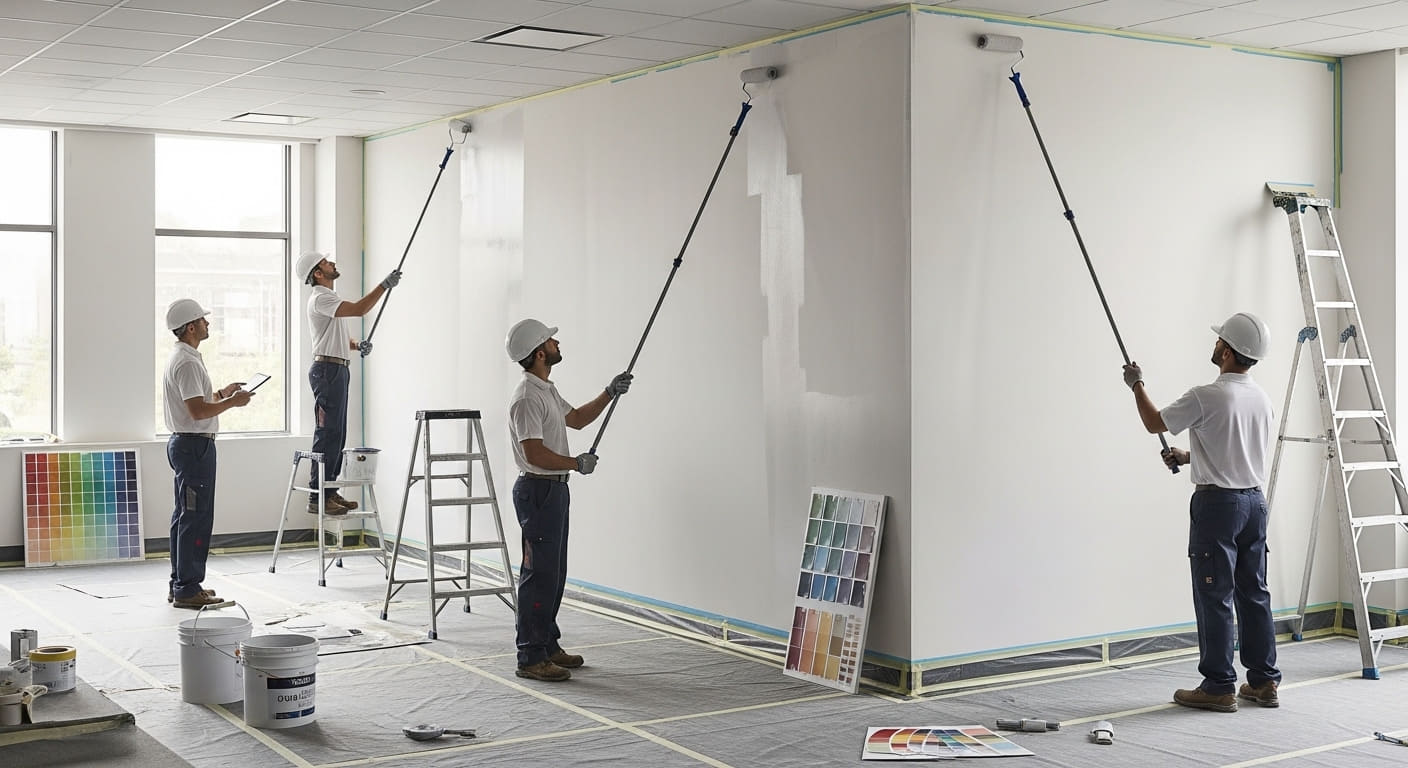
A fresh coat of paint does more than just cover up scuff marks; it revitalizes a brand, improves employee morale, and protects the structural integrity of a building. In the competitive Australian market, the appearance of your commercial property speaks volumes before a client even walks through the door. However, commercial painting is a different beast compared to residential work. The scale is larger, the timelines are tighter, and the stakes are higher.
Managing a project of this magnitude requires precision. Whether you are repainting a high-rise office in Sydney, a retail complex in Melbourne, or an industrial warehouse in Brisbane, quality cannot be compromised. A poor job leads to peeling paint, business disruption, and a waste of budget. Conversely, a high-quality finish lasts for years and adds tangible value to your asset.
To help facility managers and business owners navigate this process, we have compiled fifteen essential tips to ensure your project delivers a flawless result.
1. Define the Scope Clearly
Before contacting any contractors, write down exactly what needs to be done. Are you painting just the walls, or do the ceilings, trims, and doors need attention too? Be specific about inclusions and exclusions. A vague brief leads to vague quotes and eventual disputes over “extra” costs.
2. Prioritize Preparation Over Painting
The secret to longevity in commercial painting lies in the prep work. Ensure your contractor plans to wash surfaces, sand down glossy areas, fill cracks, and prime patches. If they start applying the topcoat immediately, the paint will fail. In Australia, where dust and humidity vary, surface preparation is 80% of the job.
3. Verify Licences and Insurance
Never hire a contractor who cannot prove they are licensed for commercial work. In Australia, this is a legal requirement. Additionally, ensure they carry Public Liability Insurance and Workers Compensation. Commercial sites are busy; you need to know you are protected if an accident occurs.
4. Choose the Right Product for the Environment
Standard wall paint won’t survive in a high-traffic corridor or a humid commercial kitchen. Discuss product selection with your painter.
- High-Traffic Areas: Use washable, scuff-resistant acrylics.
- Exteriors: Use UV-resistant membranes designed for the harsh Australian sun.
- Industrial Floors: Epoxy coatings are essential for durability and safety.
5. Schedule for Minimal Disruption
Time is money. A quality commercial painter will work around your business hours. Ask if they can work nights or weekends to ensure your operations continue smoothly. A project that shuts down your business for a week is often more expensive than paying a premium for after-hours labour.
6. Inspect the Safety Plan (SWMS)
Safety is non-negotiable. Ask to see their Safe Work Method Statement (SWMS). This document details how they manage risks like working at heights, handling hazardous chemicals, and managing pedestrian traffic around the site. A contractor who takes safety seriously usually takes quality seriously too.
7. Request a Colour Consultation
Don’t guess the colour from a tiny chip. Commercial spaces have different lighting conditions (fluorescent vs natural light) that change how a colour looks. Many professional commercial painting firms offer colour consultations or will apply large sample patches on the wall so you can see the true effect before committing to thousands of litres.
8. Check for Lead Paint
If your commercial building was built before 1970, there is a risk of lead paint. Disturbing this is a health hazard. A professional contractor will test for lead before sanding and will have specific protocols for safe removal or encapsulation if it is found.
9. Understand the Weather Factor
In Australia, painting during a heatwave or a rainy week can ruin the finish. Paint needs specific temperature ranges to cure properly. A good painter will monitor the weather forecast and may reschedule exterior work to ensure the product bonds correctly.
10. Communication is Key
Establish a single point of contact. You don’t want to be chasing three different foremen for an update. Regular site meetings or progress reports ensure that the project is tracking on time and any issues are resolved immediately.
11. Protect Your Assets
Ensure the quote includes ample protection for your furniture, flooring, and equipment. Drop sheets, plastic wrapping, and masking tape should be used generously. Paint splatter on expensive carpet or office tech is a sign of carelessness.
12. Review Past Projects
Ask for references or drive past their recent commercial jobs. Look at the edges. Are the lines straight where the wall meets the ceiling? Is the coverage consistent? Seeing real-world examples gives you confidence in their craftsmanship.
13. Don’t Ignore the Warranty
A reputable company stands behind its work. Ensure you receive a written warranty that covers both the product (from the manufacturer) and the workmanship. In commercial painting, a standard workmanship warranty should last several years, protecting you against peeling or blistering.
14. Plan for Maintenance
Paint doesn’t last forever. Ask your contractor for a maintenance plan. This might include annual wash-downs for exterior facades or touch-up kits for high-wear internal areas. Proactive maintenance extends the life of the paint job significantly.
15. Sign a Detailed Contract
Finally, get everything in writing. The contract should outline the start and finish dates, the payment schedule, the specific products to be used (brand and colour), and the cleanup responsibilities. A detailed contract is the roadmap to a successful project.

Questions and Answers: Common Questions About Commercial Painting in Australia
Q: How often should a commercial building be repainted?
A: This depends on the location and usage. Generally, commercial interiors need refreshing every 3 to 5 years due to high traffic and wear. Exteriors in Australia typically last 7 to 10 years, but coastal properties exposed to salt spray may need attention sooner (every 5 to 7 years) to prevent corrosion and degradation.
Q: Can painters work while my office is open?
A: Yes, experienced commercial painters are used to working in occupied environments. They use low-VOC (Volatile Organic Compound) paints to minimize smells and fumes. They also work in sections to keep disruptions localized. However, for maximum efficiency, scheduling work during evenings or weekends is often the preferred strategy.
Q: What are low-VOC paints and why should I use them?
A: VOCs are solvents that are released into the air as paint dries. They cause that strong “fresh paint” smell and can trigger headaches or dizziness. Low-VOC or zero-VOC paints are environmentally friendly and safer for your staff. In a commercial setting with poor ventilation or air conditioning recycling the air, using low-VOC products is a responsible choice for indoor air quality.
Q: Do I need a permit to paint the exterior of my business?
A: Usually, no, if you are simply repainting maintenance. However, if your building is heritage listed, or if you are changing the colour scheme drastically in a strict council zone or a strata complex, you may need approval. It is also important to check if you need a permit to occupy the footpath for scaffolding or boom lifts during the project.
Q: Is it cheaper to paint over wallpaper or remove it?
A: It is almost always better to remove wallpaper. Painting over it is a shortcut that often fails. The moisture in the paint can cause the paper to bubble and peel. While removing wallpaper and skimming the wall to make it smooth is more labour-intensive upfront, it provides a superior, long-lasting surface for your commercial painting investment.
Conclusion: Your Path to a Successful Commercial Painting in Australia
Achieving a high-quality finish on a commercial property is not an accident; it is the result of planning, expertise, and attention to detail. By following these fifteen tips, you move from hoping for a good result to ensuring one.
Your building is a significant asset. Treating the painting process with the seriousness it deserves protects that asset and projects a professional image to your clients and stakeholders. From checking the credentials of your contractor to selecting the right durable coatings for the Australian climate, every decision matters.