


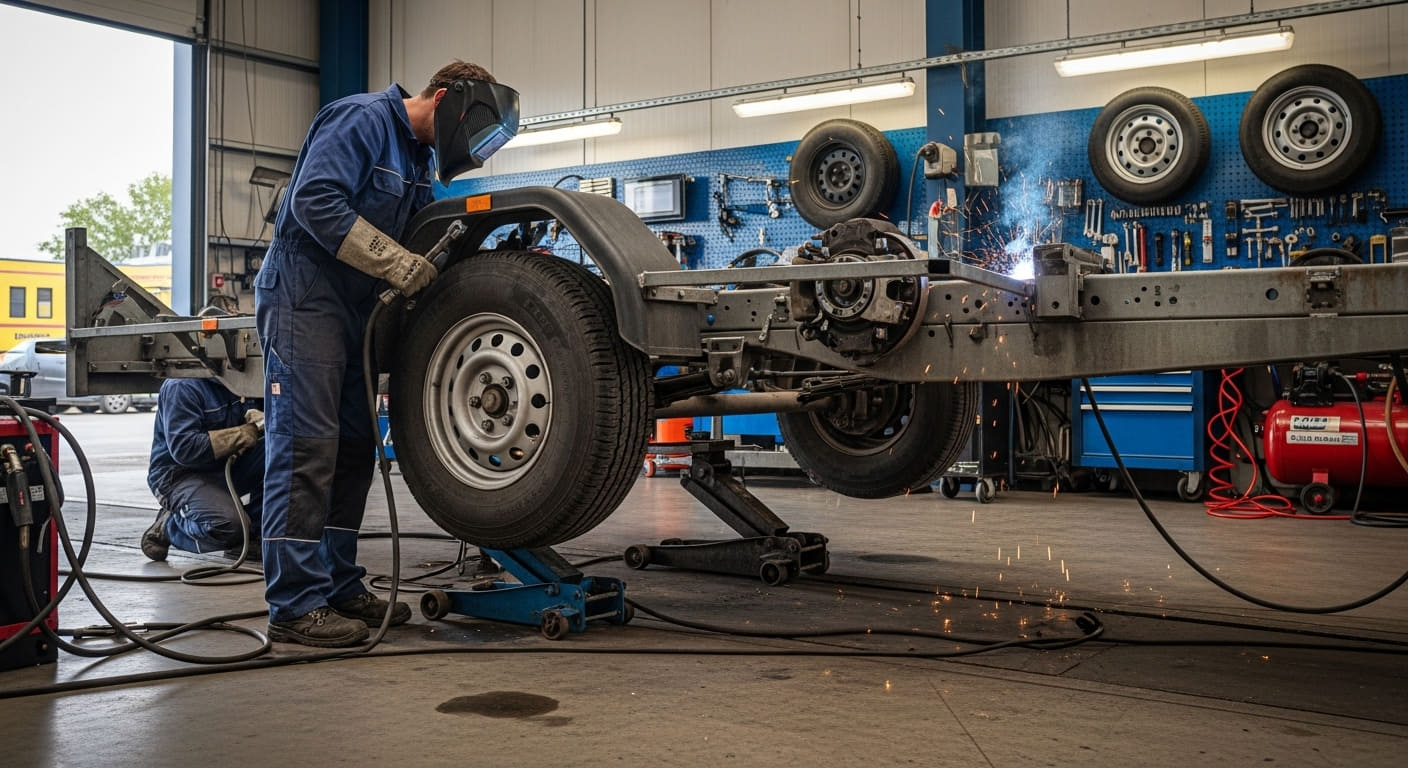
There is something distinctly Australian about hitching up a trailer on a Friday afternoon. Whether you are a tradie tossing tools into a box trailer, a family hooking up the caravan for a trip down the coast, or a weekend warrior taking the boat out to Lake Eildon, towing is a massive part of our lifestyle. We spend hours researching the best towing vehicles and maintaining our car engines, yet the trailer behind us often gets forgotten. It sits in the backyard, sometimes in long grass, waiting for its next job.
However, a neglected trailer is a hazard. A wheel coming loose or a brake failure on the winding roads of the Yarra Valley is a nightmare scenario nobody wants to experience. Keeping your trailer in top condition ensures you get to your destination without stress. This guide dives into the essentials of trailer repairs, covering everything from wheel bearings to safety chains, ensuring your load stays right where it belongs—behind you.
Understanding the Basics of Trailer Maintenance
Many people assume that because a trailer lacks an engine, it does not need regular servicing. This is a dangerous misconception. While there are no spark plugs or oil filters to change, the running gear endures immense stress. The vibration from country roads, the weight of heavy loads, and exposure to the elements all take a toll on the mechanical components.
When we talk about trailer repairs, we are looking at the structural and mechanical integrity of the unit. The goal is to catch small issues before they become roadside emergencies.
The Vital Role of Wheel Bearings
If there is one component that fails more than any other, it is the wheel bearing. These small metal rings allow your wheels to spin freely. When they fail, the friction creates intense heat, which can weld the hub to the axle or causing the wheel to shear off completely.
For boat trailers, the risk is higher because dunking hot hubs into cold water creates a vacuum that sucks water into the bearing cavity. This causes rust and rapid failure.
- Listen for the noise: A failing bearing often makes a low grinding or growling sound.
- Check for play: Jack up the trailer and wiggle the wheel. If there is movement, the bearings are loose or worn.
- Grease is gold: Regular repacking of bearings with high-temperature grease is essential.
If you are unsure how to inspect them, booking a professional for trailer repairs is the safest bet. They can clean, inspect, and repack the bearings, or replace them if pitting has occurred.
Checking Tyres and Suspension
Trailer tyres often rot before they wear out. Because trailers sit stationary for long periods, the rubber can degrade, leading to blowouts even if the tread looks deep. You should check the sidewalls for small cracks, known as crazing.
The suspension also takes a beating. Most trailers use leaf springs. heavy loads can flatten these springs or cause them to crack. If your trailer sits lower on one side or bounces excessively, the suspension hardware likely needs attention. Broken suspension can cause the trailer to sway, which is dangerous at highway speeds.
Electrical Systems and Lighting
There is a running joke among motorists that it is rare to see a trailer with all its lights working. However, faulty lights are illegal and dangerous. The electrical system on a trailer is exposed to rain, mud, and sun, making it prone to corrosion.
The Connection Point
The plug that connects your car to the trailer is the most common failure point. In Australia, we typically use 7-pin flat or round plugs. If the pins get dirty or bent, the connection fails.
- Clean the pins: Use a contact cleaner and a small brush to remove green corrosion.
- Check the earth: Most lighting problems are due to a bad “earth” or ground wire. If your lights flicker or the indicators flash when you press the brake, it is usually an earthing issue.
- Secure the cable: Ensure the cable does not drag on the road.
Upgrading to LED
One of the best modern trailer repairs you can make is swapping old bulb lights for sealed LED units. LEDs are brighter, draw less power, and are generally waterproof. This makes them far more reliable for boat trailers and caravans that face wet conditions.
Structural Integrity and Rust Prevention
The chassis is the backbone of your trailer. In the Yarra Valley and surrounding areas, moisture can lead to rust, which eats away at the strength of the metal. Surface rust is common and usually cosmetic, but deep, flaking rust on the drawbar or chassis rails is a major safety concern.
Dealing with Corrosion
If you see rust spots, treat them early. Wire brush the area and apply a rust converter and paint. However, if the metal is thinning or has holes, welding repairs or section replacements are necessary.
Couplings and Safety Chains
The coupling is the device that latches onto your car’s tow ball. It must move freely but lock securely. If the handle is stiff or the adjustment nut is loose, the trailer could pop off.
Safety chains are your last line of defense. In Australia, the chain must be stamped with a load rating that matches or exceeds the trailer’s weight. The D-shackles used to connect the chain to the car must also be load-rated. Using a hardware store padlock or a non-rated shackle is illegal and unsafe.
Brakes and Axles: The Heavy Lifting
For trailers with a Gross Trailer Mass (GTM) over 750kg, brakes are a legal requirement in Australia. For anything over 2000kg, you need a breakaway system that activates the brakes if the trailer detaches.
Mechanical vs. Electric Brakes
Smaller trailers often use mechanical override brakes. These work using the momentum of the trailer pushing against the car to pull a cable and activate the brakes. The cable needs regular adjustment to ensure the brakes engage at the right time.
Larger caravans and heavy-duty trailers use electric brakes. These require a controller inside the towing vehicle. Trailer repairs for electric systems involve checking the magnets and shoes inside the drum. If your electric brakes feel weak or grab unevenly, the magnets may be worn out or the wiring might have a fault.
Axle Alignment
If you notice your trailer tyres are wearing out rapidly on the inside or outside edge, you might have a bent axle. Hitting a curb or a deep pothole can bend the axle slightly, throwing the alignment out. This creates drag and destroys tyres. A professional workshop can assess the axle and determine if it can be straightened or needs replacement.
The Importance of Professional Trailer Repairs
While many Aussies are handy with a spanner, some aspects of trailer repairs require professional tooling and knowledge. Setting up bearing pre-load correctly, welding structural chassis members, and diagnosing electric brake faults are jobs best left to experts.
At a dedicated workshop, the mechanics look at the complete picture. They understand the local terrain in the Yarra Valley, from the steep descents of the Black Spur to the freeway driving on the Melba Highway. They ensure that every component, from the jockey wheel to the taillights, meets safety standards.
Professional maintenance protects your investment. A well-maintained trailer holds its value better and, more importantly, keeps you and other road users safe.

Questions and Answers: Common Questions About Trailer Repairs in the Yarra Valley
Q: Do I need a Roadworthy Certificate (RWC) for my trailer in Victoria?
A: In Victoria, light trailers (under 4.5 tonnes ATM) generally do not require a Roadworthy Certificate to be sold or transferred, unlike cars. However, the trailer must still be in a roadworthy condition to be legally towed on public roads. If a police officer deems your trailer unsafe, you can be fined or issued a defect notice. Heavy trailers have different requirements.
Q: How often should I have my trailer bearings serviced?
A: It is recommended to check your bearings every 12 months or every 10,000 kilometers, whichever comes first. If you have a boat trailer that goes into the water, you should check them more frequently, ideally every six months, as water ingress is the primary cause of bearing failure.
Q: Why do my trailer lights flicker when I go over bumps?
A: This is a classic sign of a loose connection or a bad earth. The vibration from the bump breaks the electrical circuit momentarily. Check that the plug on the car and trailer are tight and clean. Also, check the ground wire (usually white) is securely screwed to a clean metal part of the trailer frame.
Q: Can I weld my trailer chassis myself?
A: While you might be able to weld, structural repairs on a trailer chassis should be done by a qualified professional. The drawbar and chassis rails are under immense tension. a poor weld can snap under load. improper heating of the metal can also weaken the steel surrounding the repair.
Q: What is the difference between ATM and GTM?
A: ATM (Aggregate Trailer Mass) is the total weight of the trailer plus its maximum load when uncoupled from the car. GTM (Gross Trailer Mass) is the weight transmitted to the ground by the trailer wheels when coupled to the car. Knowing these figures is vital for ensuring you are not overloading your trailer or your towing vehicle, which is a key part of road safety.
Conclusion: Your Path to a Successful Trailer Repairs in Australia
Towing a trailer should give you a sense of freedom, allowing you to carry what you need for work or leisure. It should not be a source of anxiety. By staying on top of maintenance, you ensure that every trip is safe and smooth.
Remember that trailer repairs are not just about fixing what is broken; they are about preventative care. Checking your bearings, lights, and structure regularly prevents the dreaded roadside breakdown. It ensures that when you hit the brakes, the trailer stops with you, not into you.
Whether you are hauling a caravan for a holiday or a box trailer for a renovation, the condition of your equipment matters. Don’t wait for a wheel to wobble or a light to fail. Take a proactive approach. If you are in the Yarra Valley or surrounding Melbourne areas, seeking professional advice and service is the best way to keep your trailer tracking true for years to come. For expert assistance with all your towing needs, visit yarravalleyautocare.com.au.