

A reliable furnace is the heart of a comfortable home during the cold winter months. However, even the best heating systems can run into trouble when you need them most. Most homeowners wait until the heat stops completely before they pay attention to their unit. In reality, your system usually provides several red flags before a total breakdown occurs. Recognizing the early warning signs of furnace problems can save you from a freezing night. It also helps you avoid the high costs of emergency repairs and parts replacement.
Common symptoms of a struggling furnace include uneven heating across different rooms of your house. You might notice the system turning on and off too frequently, which is called short-cycling. Rising energy bills are another major indicator that your furnace is losing its overall efficiency. Weak airflow from your vents often suggests issues with the ductwork or the internal blower motor. Catching these small symptoms early allows you to address minor glitches before they lead to a system failure.
- Check the Thermostat Settings
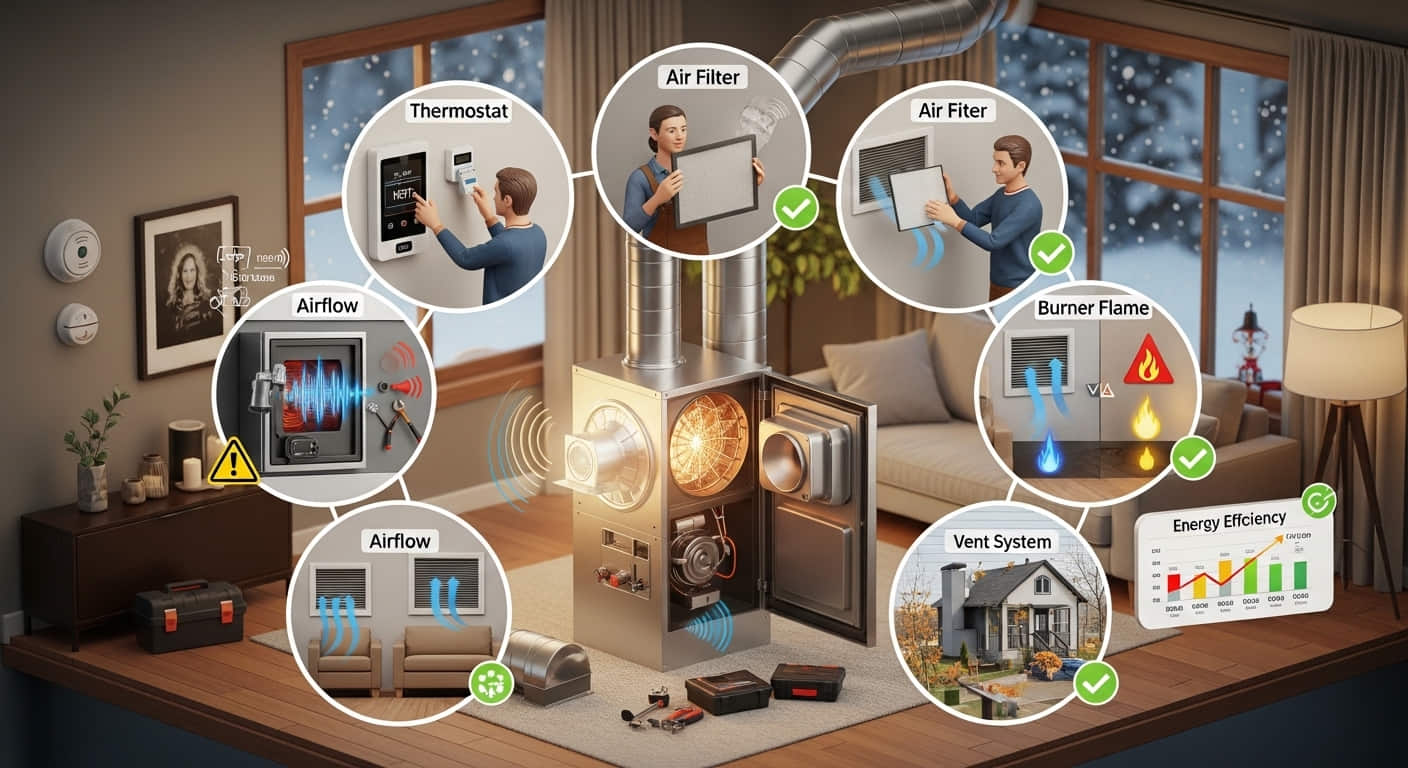
The first step in troubleshooting is often the simplest. Many service calls end up being a quick fix related to the thermostat. Ensure your device is set to “heat,” not “cool” or “off.” If the screen is blank, the batteries might be dead and need immediate replacement. Dust inside a thermostat can also cause it to lose its temperature calibration over time.
A malfunctioning thermostat creates poor communication with your furnace, leading to inconsistent indoor temperatures. If your home feels cold despite the thermostat set to high, try bumping the temperature up by 5 degrees. This helps determine if the system responds to the manual command. This simple check often restores normal operation without the need for a professional. If the furnace problems persist after these checks, you may have a deeper mechanical issue.
- Inspect and Replace the Air Filter
A clogged air filter is the leading cause of furnace malfunctions and poor air quality. When a filter is dirty, it restricts the amount of air entering the system. This forces the furnace to work much harder to move heat through your home. This extra strain increases your monthly energy consumption and can lead to internal overheating.
- Replace your furnace filters every one to three months for the best results.
- Clean filters improve the overall heating efficiency and airflow in every room.
- Regular filter maintenance protects sensitive internal components from dust and debris buildup.
- Check your filter more often if you have pets or live in a dusty area.
- Using a high-quality pleated filter can help trap smaller allergens and pollutants.
Replacing a filter is an easy DIY task that significantly boosts your furnace’s performance. It is the most cost-effective way to extend the lifespan of your heating equipment.
- Listen for Unusual Noises
Your furnace should run with a steady, low hum. Strange sounds, such as banging, rattling, or squealing, are clear indicators of mechanical distress. A rattling sound might mean a panel is loose or a screw has fallen out. Squealing often points to a worn-out fan belt or a bearing that needs lubrication.
If you hear loud or metallic noises, turn the system off immediately to prevent further damage. Inspect the exterior for any loose panels or visible debris that might be vibrating. If the noise continues after you restart the system, it is time to call a technician. Ignoring these sounds can lead to a major mechanical failure that is very expensive to fix.
- Check the Burner Flame Color
You can often see the burner flame through a small window on the furnace cabinet. A healthy furnace flame should always burn a steady, bright blue color. This indicates that the natural gas is burning cleanly and efficiently within the system. If you see a yellow, orange, or flickering flame, you have a serious problem.
A yellow flame indicates incomplete combustion, a major safety hazard to your family. This condition can produce dangerous, odorless, invisible carbon monoxide gas. Ensure you have working carbon monoxide detectors installed on every floor of your home. If the flame color is off, shut down the furnace and seek professional help immediately.
- Monitor Airflow and Heating Performance
Weak airflow from your registers makes your home feel drafty and uncomfortable. This issue is often linked to the blower motor or leaks within your ductwork. You should walk through your home and check that all air vents are completely open. Sometimes furniture or curtains block the registers, which prevents heat from entering the room properly.
If the air coming out feels lukewarm, the system might be struggling to reach its target temperature. Check for any blockages in the return air ducts as well. Replacing a dirty filter usually fixes minor airflow issues and restores your home’s comfort. Consistent airflow ensures that the furnace does not cycle too often and waste electricity.
- Inspect the Flue and Venting System
The furnace flue removes toxic combustion gases from your living space. If the flue becomes clogged with soot, bird nests, or debris, it creates a backdraft. Most modern furnaces have safety sensors that will shut the system down if the vent is blocked. This prevents dangerous gases from entering your home and protects your family from harm.
Homeowners should visually inspect the outdoor vent for any obvious obstructions, such as snow or leaves. Professional cleaning of the venting system ensures that exhaust gases flow freely to the outside. This maintenance step is vital for preventing overheating and ensuring your furnace’s safe operation.
- Evaluate Energy Bills and Efficiency
Your monthly utility bill is a great diagnostic tool for your heating system. A sudden, unexplained increase in costs usually means the furnace is working harder than it should. This happens as components age or when the system lacks proper lubrication and cleaning. Comparing your current usage to the same month last year can reveal hidden efficiency problems.
If your bills continue to climb despite regular maintenance, your system may be reaching the end of its life. Scheduling a professional tune-up can bring those costs back down to a manageable level. In some cases, replacing an old, inefficient unit with a new model is the best long-term financial move.
When to Call a Professional HVAC Technician
While DIY troubleshooting is helpful, some furnace issues require a licensed expert’s touch. Complex problems involving the heat exchanger, gas valves, or circuit boards are dangerous for amateurs to handle. Professionals have the specialized tools and training to safely diagnose deep mechanical issues.
An annual maintenance inspection is the best way to ensure your system stays safe and efficient. Technicians can spot small cracks in the heat exchanger that could allow carbon monoxide to leak. They also clean the burners and calibrate the system for peak winter performance. Investing in professional care extends your furnace’s lifespan and provides your family with peace of mind.
Conclusion
Maintaining a functional furnace does not have to be a stressful experience for homeowners. By following this guide, you can identify and fix minor issues before they become major emergencies. Always prioritize safety by checking your flame color and keeping your air filters clean. If a problem seems too complex or involves gas lines, never hesitate to call a local expert. Consistent care keeps your home warm and your energy bills low all winter long.