


As the chill of winter makes its presence felt across Australia, many of us start dreaming of a home that’s consistently warm, comfortable, and inviting. Gone are the days of huddling around a single space heater, or shivering as you dash from a warm living room to a frosty bedroom. Imagine stepping out of bed onto a comfortably warm floor, with the entire house enveloped in a gentle, even heat. This dream becomes a reality with a well-chosen duct heating system, a powerful home improvement that truly transforms your winter living experience.
For Australian homeowners, especially those in the colder regions like Victoria, a reliable heating solution is more than just a convenience; it’s essential for health, comfort, and well-being. A modern duct heating system provides a whole-home solution, ensuring every corner of your property benefits from regulated warmth. This guide explores why this type of heating has become a leading choice for residential comfort, detailing its benefits, how it works, and what to consider when upgrading your home.
The Core of Comfort: What is a Duct Heating System?
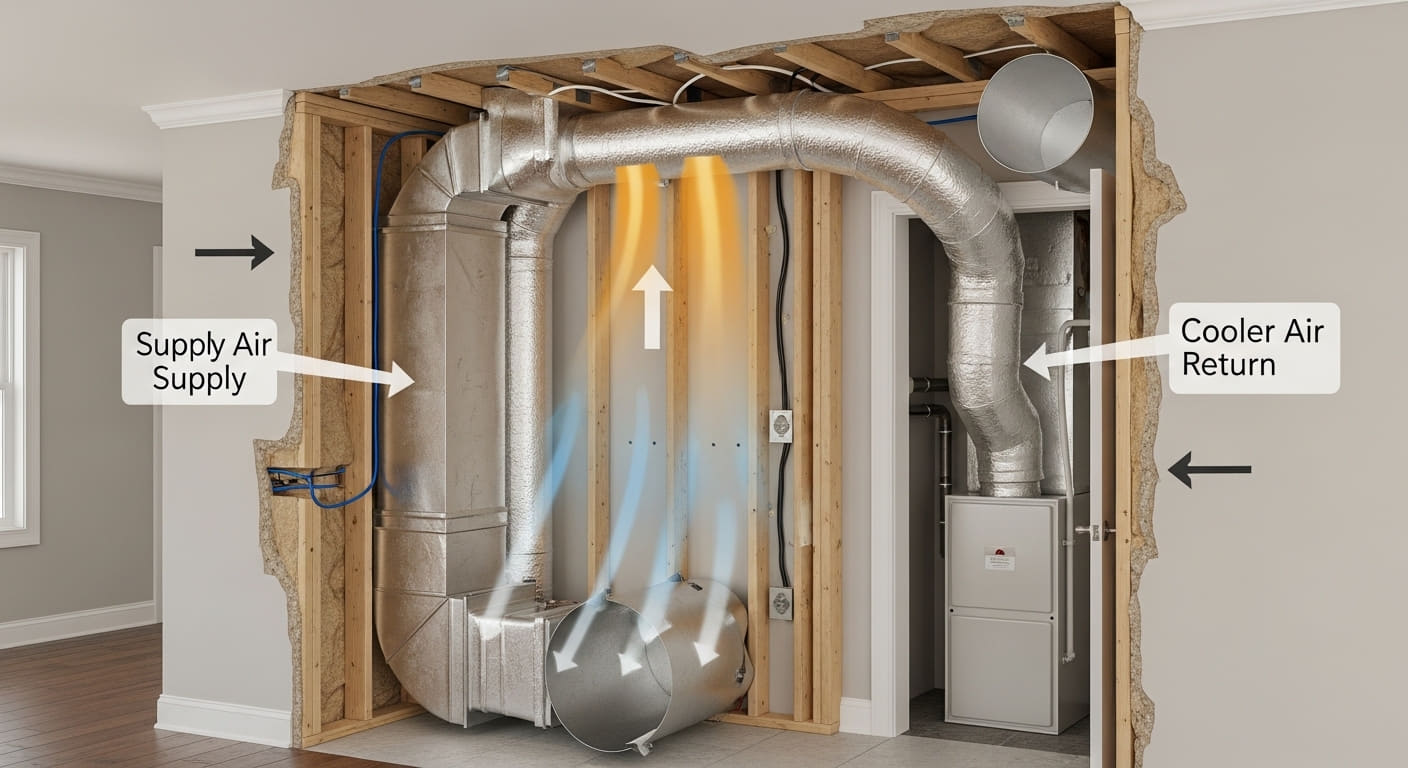
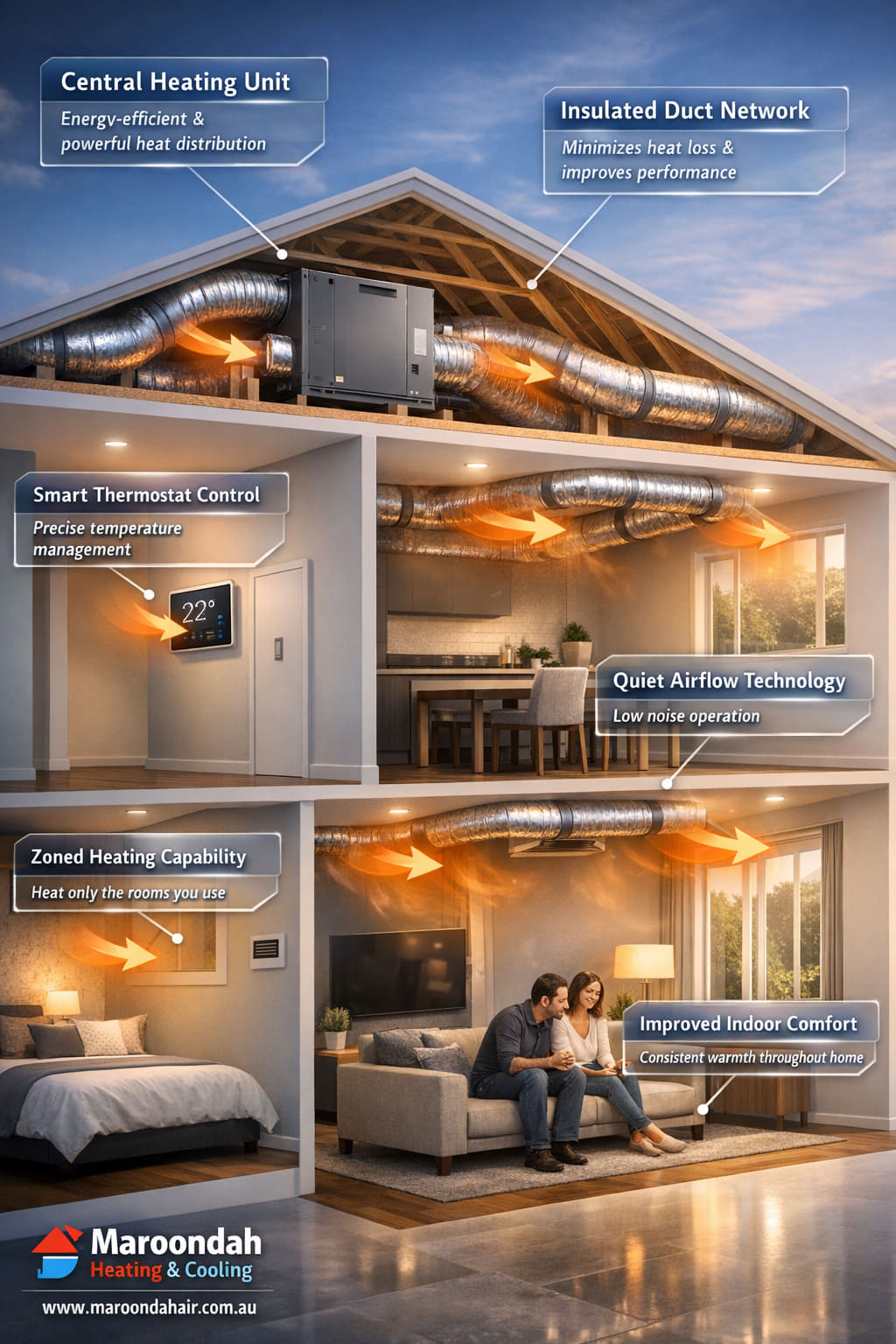
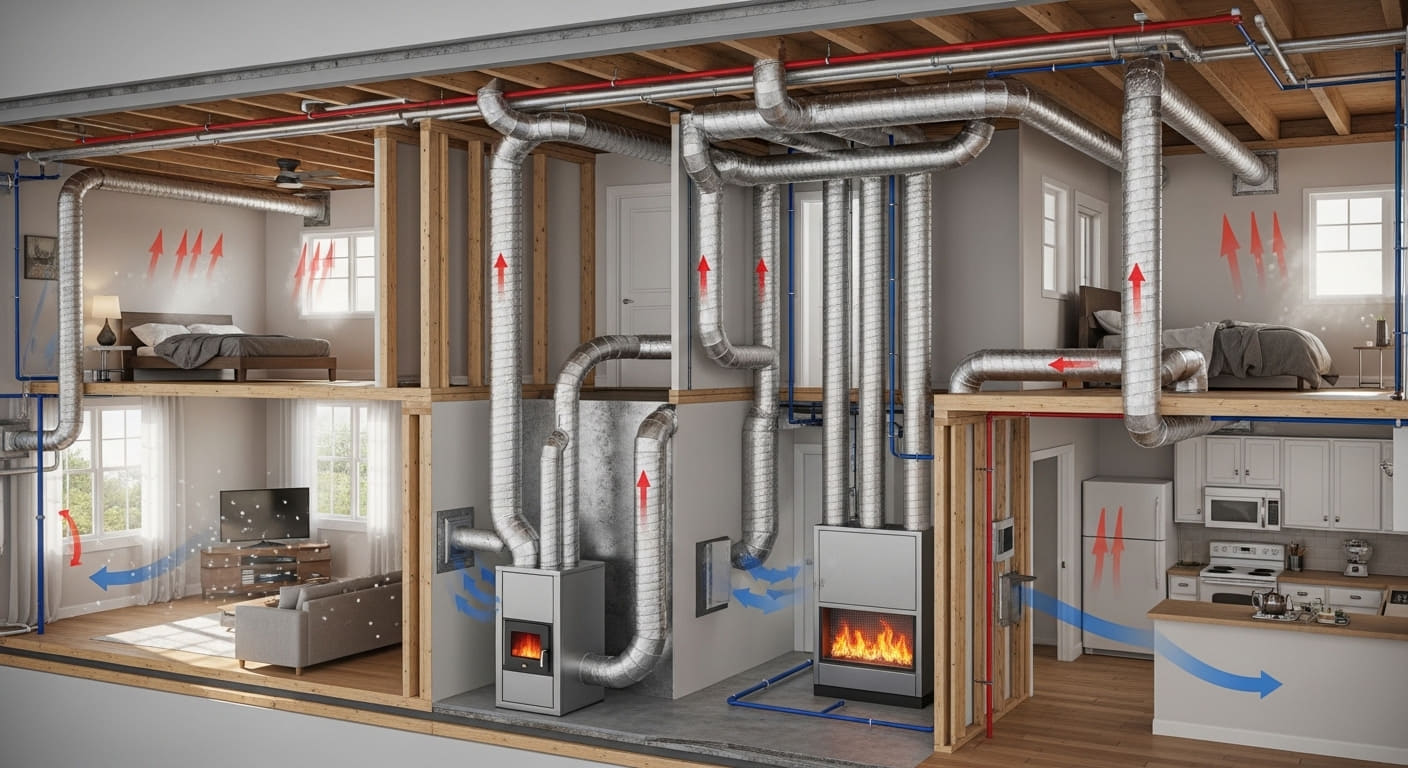
At its heart, a duct heating system is a central heating solution that works by warming air in one central unit and then distributing that heated air throughout your home via a network of insulated ducts. This ingenious design ensures that warmth isn’t concentrated in one spot but gently permeates every room, creating a consistently pleasant indoor climate.
Let’s look at the key components that make this comfort possible:
- The Heater Unit (Furnace or Heat Pump): This is where the magic happens. For gas ducted heating, a gas furnace burns natural gas or LPG to heat the air. For electric ducted heating (reverse-cycle), an outdoor heat pump extracts warmth from the outside air and transfers it indoors. This unit is typically located in your roof space, under the floor, or sometimes discreetly outside the home.
- The Ductwork: These are the insulated channels, like arteries, that carry the conditioned air from the main unit to various rooms. They are usually hidden within your ceiling or floor cavities, out of sight.
- The Vents (or Registers): These are the grilles you see in your ceiling or floor. They are the entry points for the warm air into your living spaces, designed to blend in with your home’s aesthetics.
- The Thermostat: Your control centre. Mounted on a wall, often in a central area, it allows you to set your desired temperature, program heating schedules, and manage different zones within your home.
Gas Ducted Heating: The Warmth You Know
Gas ducted heating has long been a popular choice in Australian homes. It uses natural gas or LPG to generate heat, offering a robust and rapid response to cold temperatures. Many homeowners appreciate the strong, immediate warmth that a gas duct heating system provides, which can quickly make a cold house feel cosy. It’s often praised for its ability to produce a very “hot” feeling air, perfect for those really chilly mornings.
Electric Ducted Heating (Reverse-Cycle): All-Season Efficiency
An increasingly favoured option, particularly given Australia’s often year-round climate demands, is an electric ducted heating system, commonly known as a reverse-cycle ducted system. This system operates as a heat pump, meaning it can both heat your home in winter and cool it in summer from the same unit. It works by moving heat, rather than generating it, which makes it incredibly energy-efficient. While the heat might feel different to gas, it provides consistent warmth and the added benefit of summer cooling, making it a comprehensive year-round climate control solution.
Why Australians are Choosing Ducted Heating for Their Homes
The shift towards duct heating system installations across Australia is driven by a clear set of advantages that cater to our specific climate and lifestyle.
Unparalleled Whole-Home Warmth and Consistency
Say goodbye to cold spots. With a duct heating system, every room in your house, from the living areas to the bedrooms and even the bathrooms, receives an even distribution of warm air. This creates a uniform, comfortable environment throughout your entire home, eliminating the need for multiple portable heaters or the stark temperature differences often found with wall-mounted units. It’s about creating a harmonious living space where comfort extends to every corner.
Discreet Design and Quiet Operation
For many homeowners, aesthetics are important. A duct heating system integrates seamlessly into your home. The main unit and extensive ductwork are hidden away, typically in the roof space or under the floor. All you see are the subtle, unobtrusive vents in your ceiling or floor, which can be colour-matched to your decor. Furthermore, modern systems are engineered for quiet operation, meaning you get to enjoy the warmth without the distracting noise often associated with other heating appliances.
Smart Control, Zoning, and Energy Management
One of the most appealing features of a contemporary duct heating system is the level of control it offers. Advanced thermostats allow you to program heating schedules to suit your family’s routine. Even better, many systems offer zoning capabilities. This means you can divide your home into different areas (e.g., living zone, sleeping zone) and heat only the sections you are currently using. This intelligent approach to heating helps significantly manage energy consumption and running costs, a crucial consideration for Australian households facing rising utility bills. Imagine warming only the living room during the day and then switching to the bedrooms in the evening, all from a central control or even a smartphone app.
Boosting Home Value in the Aussie Market
Investing in a high-quality duct heating system is a smart move for your home’s value. In Australia’s competitive real estate market, features that enhance comfort, efficiency, and appeal are highly sought after by prospective buyers. A modern, well-maintained ducted heating system is seen as a premium feature that significantly increases your property’s attractiveness and can contribute positively to its resale value. It shows foresight and a commitment to quality living.
Planning Your Ducted Heating Project: What You Need to Know
Embarking on a duct heating system installation is a significant home improvement project. Understanding the process and what to expect can make it a smooth and successful experience.
Assessing Your Home’s Suitability
While a duct heating system is versatile, certain factors determine the best fit for your home. Key considerations include:
- Roof or Underfloor Space: Sufficient space is needed for the main unit and the ductwork. Most homes with pitched roofs have adequate roof cavities.
- Home Size and Layout: These factors influence the size of the unit required and the design of the ducting to ensure even heat distribution.
- Insulation: Good ceiling and wall insulation are paramount. They prevent the warm air you’re paying for from escaping, making your system more efficient and cost-effective.
- Existing Infrastructure: For gas systems, access to a natural gas line is important. For reverse-cycle, adequate electrical supply is needed.
A professional assessment from a local expert is the best way to determine the ideal duct heating system for your specific property.
The Installation Journey: Assessment, Design, Installation, Handover
The process of installing a duct heating system is typically structured and professional:
- Initial Consultation and Site Assessment: A licensed heating specialist will visit your home. They will discuss your heating needs, inspect your home’s layout, measure rooms, and assess existing infrastructure.
- System Design and Quotation: Based on the assessment, the specialist will design a bespoke heating solution. This includes selecting the right size unit, planning the ductwork layout, identifying vent positions, and outlining any zoning options. You’ll then receive a detailed, itemised quote.
- Professional Installation: Once you approve the design, a team of certified installers will carry out the work. This involves positioning the main unit, running the ductwork, installing vents, and connecting the electrical and gas (if applicable) components. They work diligently to minimise disruption.
- Commissioning and Handover: After installation, the system is thoroughly tested to ensure everything is working correctly and efficiently. The technician will then guide you through operating your new duct heating system, explaining controls, programming, and basic maintenance.
Australian Regulations and Rebates for Heating
In Australia, the installation of any duct heating system involving gas or electrical work must be performed by appropriately licensed and certified professionals. This is a crucial safety and compliance requirement. For instance, gasfitters must be licensed for gas installations, and electricians for electrical connections. Always ask to see current licences.
Furthermore, Australian state governments often offer incentives for energy-efficient home improvements. In Victoria, for example, the Victorian Energy Upgrades (VEU) program can provide rebates or discounts on the installation of certain high-efficiency gas ducted heating systems, helping to reduce the upfront cost. It’s always worth asking your installer about any applicable government rebates.
Maximising Your Investment: Maintenance and Running Your System
A duct heating system is a durable and reliable appliance, but like any sophisticated machinery, it performs best with regular care. Proactive maintenance ensures longevity, efficiency, and consistent comfort.
Tips for Efficiency
- Filter Cleaning: Most ducted systems have return-air filters that need regular cleaning (monthly during peak use) or replacement. A clean filter allows air to flow freely, making the system work less hard and consume less energy.
- Annual Servicing: Schedule a professional service for your duct heating system at least once a year, ideally before winter starts. A qualified technician will inspect, clean, and tune the unit, ensuring it operates safely and at peak efficiency. This can catch minor issues before they become major breakdowns.
- Smart Thermostat Use and Zoning: Leverage your system’s intelligent controls. Program schedules to heat your home when you need it and reduce temperatures when you are away or asleep. Utilise zoning to heat only occupied areas, significantly reducing energy waste.
- Home Insulation: Good insulation in your ceiling, walls, and even under the floor dramatically reduces heat loss, allowing your duct heating system to maintain comfort with less effort and lower running costs.
Understanding Running Costs
While the initial cost of a duct heating system is an investment, its running costs can be very manageable with smart use. Modern systems are designed for efficiency. When comparing running costs, consider that a ducted system heats your entire home, often more efficiently than running multiple independent heaters. Factors influencing running costs include your home’s insulation, the system’s energy efficiency rating, your chosen thermostat settings, and local energy prices (gas vs. electricity tariffs). Regular maintenance plays a vital role in keeping these costs in check.
Questions and Answers: Common Questions About Duct Heating System in Australia
Q: Is a duct heating system suitable for older Australian homes?
Yes, a duct heating system can often be installed in older Australian homes, though the complexity might vary. Many older homes have ample roof space or accessible subfloor areas that can accommodate the ductwork. However, a professional site assessment is crucial to determine feasibility, especially for running ducts and ensuring your home’s electrical or gas infrastructure is adequate. Modern systems are also designed to be adaptable.
Q: How does a gas duct heating system compare to a reverse-cycle ducted system in terms of running costs in Australia?
The running cost comparison between gas and reverse-cycle duct heating system options in Australia can be complex and depends heavily on fluctuating gas and electricity prices, the system’s efficiency, and your household’s usage patterns. Generally, for sheer raw heat output, gas can often feel more powerful. However, modern reverse-cycle systems are incredibly energy-efficient, especially if you have access to off-peak electricity tariffs, making them very competitive and often cheaper to run, particularly when considering their dual heating and cooling capabilities.
Q: Can I control different temperature zones with a duct heating system?
Absolutely. Many modern duct heating system installations come with zoning capabilities. This allows you to divide your home into distinct heating zones (e.g., living areas, bedrooms, study) and control the temperature in each zone independently. This means you only heat the areas you are using, leading to significant energy savings and personalised comfort throughout your Australian home.
Q: What is the typical lifespan of a duct heating system in Australia, and what maintenance extends it?
A well-maintained duct heating system in Australia can typically last between 15 to 20 years, and sometimes even longer. To maximise its lifespan, crucial maintenance steps include annual professional servicing (ideally before winter), regularly cleaning or replacing air filters, ensuring ductwork remains sealed and intact, and promptly addressing any unusual noises or performance issues.
Q: Are there any government incentives for installing an energy-efficient duct heating system in Australia?
Yes, Australian state governments often provide incentives for homeowners to install energy-efficient heating and cooling systems. For example, in Victoria, the Victorian Energy Upgrades (VEU) program offers rebates or discounts on eligible high-efficiency ducted heating systems (both gas and reverse-cycle) that meet specific energy performance criteria. It is always recommended to consult with your chosen local installer about any current and applicable government incentives.
Conclusion: Your Path to a Successful Duct Heating System in Australia
Embracing a duct heating system for your Australian home is more than just choosing a heating method; it’s opting for a comprehensive upgrade that redefines winter living. From the consistent warmth that greets you in every room to the quiet, discreet operation and smart energy management capabilities, a modern ducted system offers a superior level of comfort and control. It’s a significant investment that pays dividends in daily enjoyment, reduced energy waste through smart zoning, and increased property value.