

When you cut down a tree, you might think the job is done. The branches are gone, the trunk has been carted away, and the sunlight is finally hitting your lawn again. But if you look down, you will see the problem that remains: the stump. It sits there, an ugly wooden obstacle in the middle of your garden, often tripping up kids or damaging lawnmower blades.
Many homeowners in Australia ignore the stump, hoping it will rot away naturally. While it will eventually decay, this process can take decades. In the meantime, that leftover wood can cause serious issues for your property. It can attract pests, sprout annoying new growth, and block you from landscaping your yard the way you want.
This is why professional stump removal is such a critical part of tree management. It is not just about aesthetics; it is about finishing the job properly. Getting rid of the stump ensures that the tree is truly gone and that your soil is ready for whatever you want to plant next.
Why Leaving a Stump is a Bad Idea
Leaving a stump in the ground might seem like the easy option, but it often leads to headaches down the track. The most significant risk in Australian suburbs is termites. These destructive pests, often called “white ants,” feed on dead wood. A decaying stump in your backyard is essentially an all-you-can-eat buffet for a termite colony.
Once termites establish a nest in an old stump, they begin to look for other food sources nearby. If that stump is close to your house, shed, or timber fencing, the colony can migrate, causing thousands of dollars in structural damage. By opting for stump removal, you remove this food source and significantly lower the risk of infestation.
The Problem of Regrowth
Another frustrating issue with leaving a stump is that many tree species refuse to die. Australian natives like Eucalypts, as well as exotic species like Willows and Poplars, have vigorous root systems. Even after the trunk is cut, the roots remain alive and full of stored energy.
To survive, the roots send up new shoots, known as “suckers.” You might see these popping up around the base of the stump, or even metres away in your lawn or garden beds. These suckers grow fast and can turn into messy, shrub-like bushes. You can cut them back, but they will keep returning until the root energy is exhausted. Mechanical stump removal destroys the root crown, stopping this cycle instantly.
How the Process Works
The most effective and common method stump removal is grinding. This involves using a specialized machine called a stump grinder. These machines come in various sizes, from small units that fit through a pedestrian gate to large, tow-behind models for massive trees.
A stump grinder features a heavy steel wheel with tungsten carbide teeth. The wheel spins at high speed, and the operator moves it back and forth across the stump. The teeth shave the wood away, turning the solid stump into a pile of wood chips and mulch.
The Importance of Depth
A professional operator does not just grind the top off. To ensure the tree does not grow back, the stump must be ground down below the surface level. Typically, a grind depth of 150mm to 300mm is sufficient for most residential needs. This depth destroys the main root ball and disconnects the lateral roots.
If you plan to replant a new tree in the exact same spot, the operator needs to know beforehand. They will need to grind deeper, often “chasing” the vertical taproots to create enough room for the new tree’s root system to establish without being blocked by old wood.
Navigating Access and Underground Services
One of the challenges of stump removal is getting the machinery to the stump. In Melbourne and other Australian cities, backyards can be tight. Side gates, narrow paths, and retaining walls can block access for larger machines.
When you hire a professional service, they will assess the access width. Most residential grinders are designed to fit through a standard 750mm to 900mm gate. If the stump is on a raised garden bed or behind a wall, handheld grinders or ramps may be needed.
Checking for Pipes and Cables
Digging into the ground always carries risks. Your garden is often home to water pipes, gas lines, stormwater drains, and NBN cables. Hitting one of these with a high-speed grinder is dangerous and expensive.
Experienced operators are trained to look for signs of underground services. They check the location of meters and the alignment of the house to the street. In Australia, checking the “Before You Dig” database is a standard safety step for major works. However, private lines like irrigation or power to a shed are not on these maps, so it is important for the homeowner to point these out if known.
Managing the Waste
Once the grinding is finished, you are left with a hole and a large mound of debris. The volume of wood chips created is usually two or three times the volume of the original stump because the wood expands when chipped.
You have a few options for dealing with this material:
- Backfill the Hole: The most common solution is to rake the wood chips back into the hole. Over time, the chips will decompose and the ground will settle.
- Garden Mulch: The leftover chips make excellent mulch for other garden beds. They help retain soil moisture and suppress weeds.
- Complete Removal: If you want to lay turf immediately, the wood chips should be removed. Wood chips consume nitrogen as they break down, which can starve new grass. In this case, the operator can cart the mulch away and you can fill the hole with clean topsoil.
Comparing Removal Methods
While grinding is the industry standard, there are other ways people attempt to remove stumps, though they are generally less effective.
- Manual Digging: This is back-breaking labor. It involves digging a massive trench around the stump to expose the roots, chopping them with an axe, and then trying to lever the stump out. For anything larger than a small shrub, this is rarely feasible.
- Chemical Removal: You can buy stump removal chemicals from hardware stores. These involve drilling holes in the stump and pouring in poison to accelerate rotting. The downside is time. It can take months or even a year for the stump to soften enough to be broken up. It also involves putting strong chemicals into your soil.
- Excavator Removal: For construction sites or large land clearing jobs, an excavator is used to pull the entire root ball out of the ground. This is fast but incredibly messy. It leaves a massive crater that needs to be filled and damages the surrounding ground. For an established garden, this is too destructive.
Mechanical grinding offers the best balance: it is fast, creates minimal disturbance to the surrounding area, and leaves the ground ready for use immediately.
Questions and Answers: Common Questions About stump removal in Australia
Q: How long does it take to grind a stump?
The time depends on the size of the stump and the type of wood. A small stump from a softwood tree might take 15 to 20 minutes. A massive, old hardwood stump could take an hour or more. Access difficulties or rocks grown into the roots can also extend the time. Generally, most residential jobs are completed within an hour or two on site.
Q: Will the roots left in the ground cause problems?
Generally, no. Once the main stump is ground out, the remaining roots are severed from the tree. They die and slowly decompose in the soil. They usually do not cause any issues with regrowth or termites, as they are no longer part of a substantial food mass. However, if the roots are very shallow and lifting pavers, they may need to be “chased” and ground out separately.
Q: How much does it cost?
Pricing is typically based on the diameter of the stump measured at ground level. Hardwood stumps are harder on the machine’s teeth and may cost slightly more than softwood. Stump removal companies also factor in travel time and access. Getting multiple stumps done at the same time is usually cheaper per stump than doing them individually.
Q: Can I hire a machine and do it myself?
You can rent small grinders from hire shops, but they are often underpowered compared to commercial machines. This makes the job take much longer and be much more physically demanding. Additionally, stump grinders are dangerous machines. Without proper training and safety gear (like face shields and kevlar pants), the risk of injury from flying debris is high. Hiring a professional is often safer and, when you factor in hire costs and time, more economical.
Q: What if the stump is right next to a fence or wall?
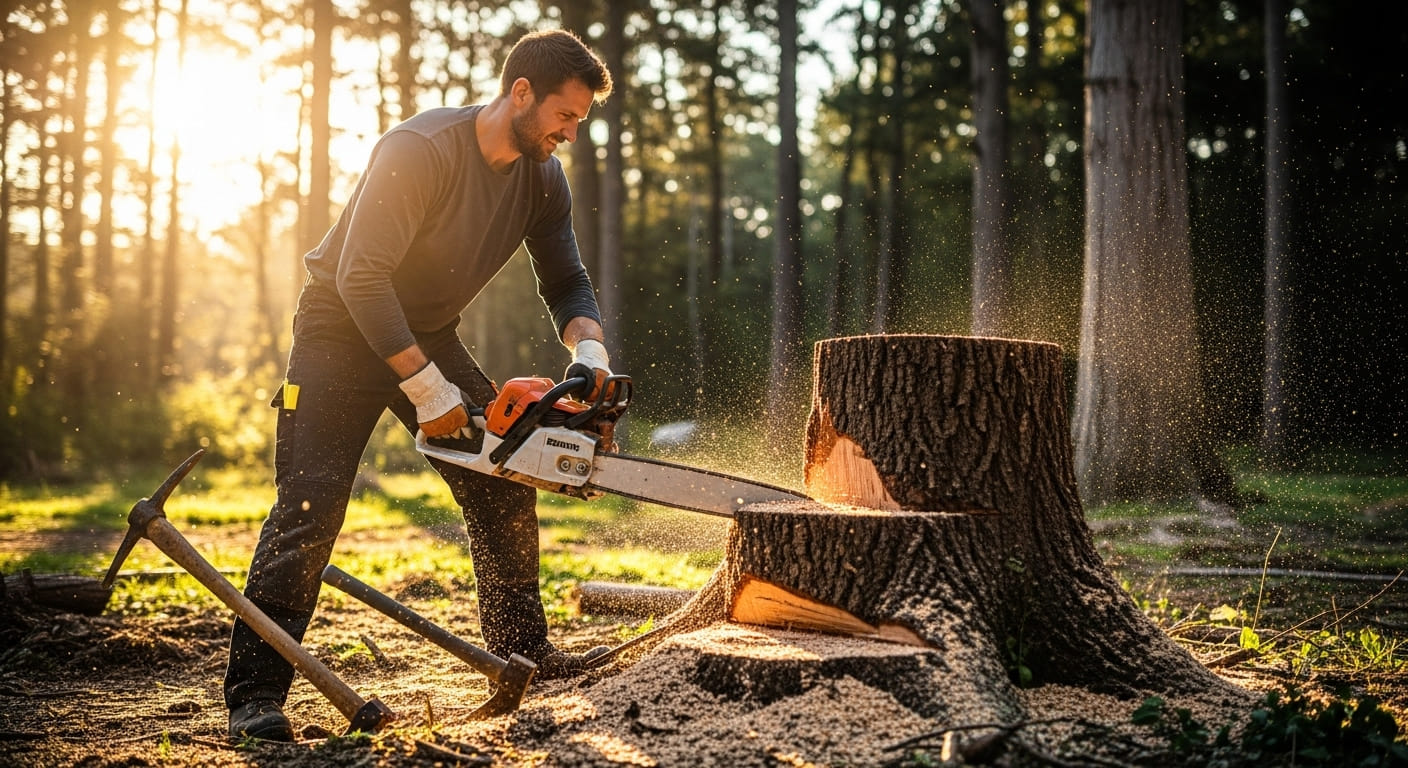
Professional grinders have guards and precise controls that allow them to get very close to obstacles. However, there is a limit. The cutting wheel cannot touch concrete or steel without causing damage. In these cases, the operator will grind as close as possible and may use a chainsaw or axe to manually remove the final sliver of wood touching the fence to ensure no damage occurs to your structures.
Conclusion: Your Path to a Successful stump removal in Australia
Finishing the job of tree removal properly is an investment in the future of your garden. A stump-free yard is safer, cleaner, and more versatile. It removes the lurking threat of termites and stops the annoying cycle of regrowth that keeps you busy with the pruning shears.