


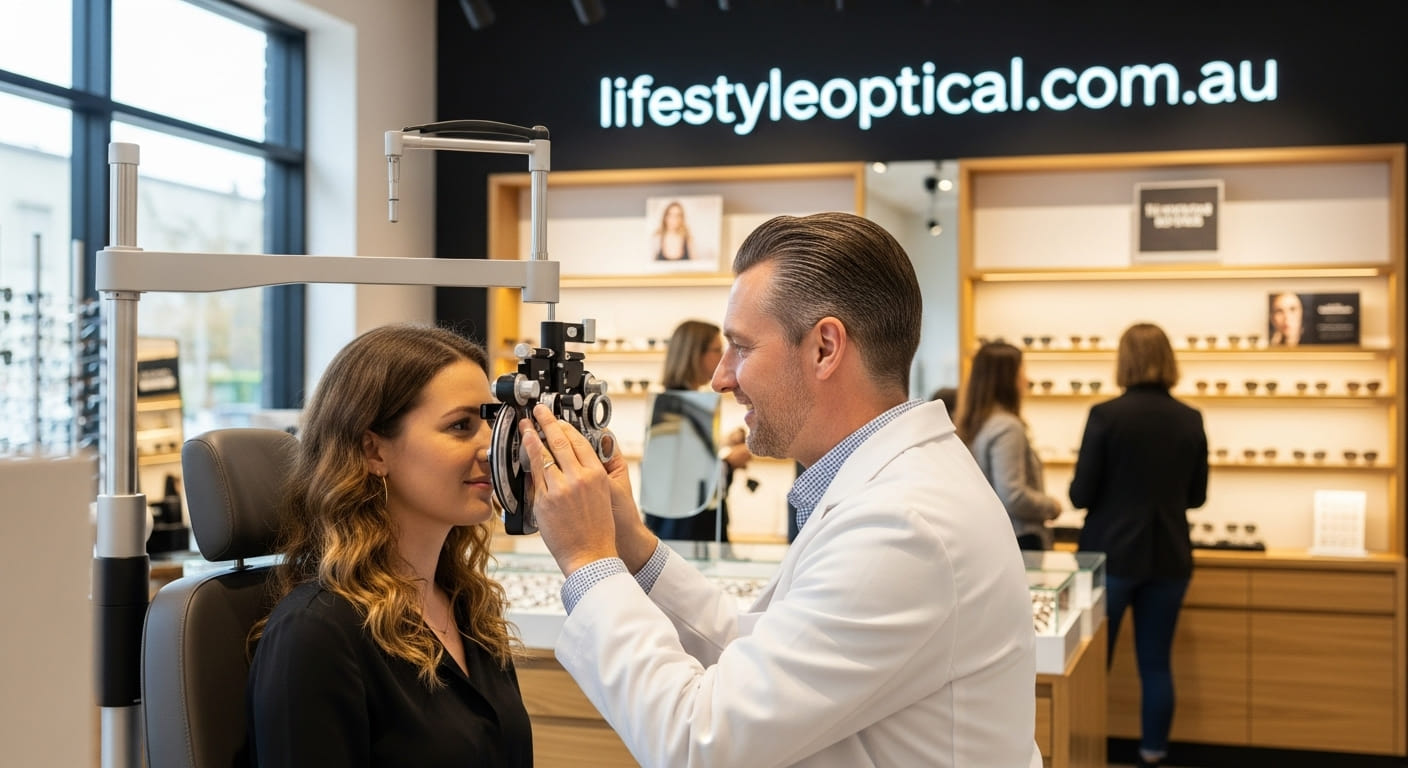
Most of us take clear vision for granted until something feels off—maybe reading gets harder, driving at night becomes tricky, or eyes feel tired after screen time. That’s when seeing an optometrist makes sense. An optometrist serves as the first stop for eye care in Australia, checking vision, spotting health issues early, and helping keep eyes comfortable and healthy.
In our country, with strong sunshine and active outdoor lives, regular visits to an optometrist protect against UV-related problems and catch changes linked to age or conditions like diabetes. Optometrists handle everyday vision needs while screening for bigger concerns, making them a key part of staying well.
What Does an Optometrist Do?
An optometrist examines eyes, diagnoses vision problems, and manages many eye conditions. They complete university training and register with the Optometry Board of Australia to practice.
Common tasks include:
- Performing comprehensive eye tests to assess vision sharpness and eye health.
- Prescribing glasses or contact lenses for refractive errors like short-sightedness or astigmatism.
- Detecting signs of diseases such as glaucoma, cataracts, or macular degeneration.
- Checking for effects of general health issues visible in the eyes, like high blood pressure or diabetes.
- Providing advice on eye protection, dry eye relief, or digital strain.
Optometrists refer to ophthalmologists or specialists when surgery or advanced treatment becomes necessary.
Why See an Optometrist Regularly?
Eye tests reveal more than just prescription needs. Many serious conditions develop quietly—no pain, no obvious signs—until vision suffers. Early detection through an optometrist often means better outcomes.
Common reasons Aussies visit include:
- Blurry vision or trouble focusing.
- Headaches from eye strain.
- Dry, red, or irritated eyes.
- Family history of eye disease.
- Diabetes or other health conditions affecting eyes.
- Changes after long screen use or outdoor exposure.
In Australia, high UV levels raise risks for issues like pterygium or cataracts—regular checks monitor these.
Children benefit too—optometrists spot lazy eye or focusing problems that affect learning.
How Often Should You See an Optometrist?
Guidelines recommend eye tests every two to three years for most adults, though needs vary.
- Children: Start around three to four years, then before school, with checks every one to two years.
- Adults under 65: Every two to three years, or sooner with changes or risks.
- Over 65: Yearly, as age-related changes speed up.
- Contact lens wearers or diabetics: Often yearly or more.
Medicare supports bulk-billed eye tests—no referral needed. Under 65 get one every three years for bulk billing, over 65 every year. Many optometrists bulk bill standard tests, keeping access straightforward.
If vision shifts or symptoms appear, book sooner—Medicare covers clinically needed tests regardless of timing.
Eye Tests and Medicare in Australia
Medicare makes eye care affordable. A standard eye test gets bulk billed for eligible people with a Medicare card.
Bulk billing rules:
- Under 65: Bulk billed every three years typically.
- 65 and over: Every year.
- Clinical need (new symptoms, changes, risks): Covered more frequently.
No out-of-pocket cost for many, though some services like contact lens fitting may involve fees.
Optometrists follow Optometry Board standards for safe, thorough care.
Questions and Answers: Common Questions About Optometrist in Australia
Folks often have these practical questions.
Q: How often does Medicare cover bulk-billed eye tests?
Under 65, typically every three years for bulk billing. Over 65, every year. Tests for clinical reasons—like vision changes or symptoms—get covered more often.
Q: What can an optometrist detect during an eye test?
An optometrist checks vision, prescribes lenses, and screens for glaucoma, cataracts, macular degeneration, diabetic eye changes, or signs of blood pressure issues.
Q: When should children first see an optometrist?
Around three to four years old, or earlier with concerns. Follow-ups help catch focusing or alignment problems early.
Q: Can an optometrist prescribe medication for eye conditions?
Yes—in Australia, many optometrists with therapeutic qualifications prescribe drops or treatments for infections, inflammation, or glaucoma management.
Conclusion: Your Path to a Successful Optometrist in Australia
Seeing an optometrist keeps vision clear, spots conditions like glaucoma or macular degeneration early, and supports overall health in our sunny, active environment. With Medicare bulk billing making tests accessible—every few years for most, yearly for older adults—an optometrist visit offers preventive care and peace of mind.
To look after your eyes, note any changes in vision, strain, or family history, then book with a registered optometrist for a full check. They’ll assess your needs, update prescriptions if required, and guide on protection or ongoing care. Regular visits to an optometrist help maintain sharp sight and wellbeing—make that appointment and keep your eyes healthy for years ahead.